Saturday, March 31, 2012

Homemade Granola


I spent part of spring break visiting my twin sister in Chicago. We've always been co-conspirators in the kitchen, and she's always inspired me with her culinary vision. As a kindergardener, thanks to a teacher with communist enthusiasms, she developed a taste for borscht, and insisted on perfecting the recipe at home. One Christmas in high school, after reading Virginia Woolf's To the Lighthouse, she recreating a magnificent version of Mrs. Ramsay's boeuf en daube. And her various sojourns in Germany during her studies have been a source of cooking inspiration.


Now that she's in the midst of the great adventure of toddler parenthood, overly-ambitious cooking projects have to take a back burner. We cooked some family favorites like crepes, both savory and sweet, and tried this delicious pasta with sardines. But mostly what we wanted to do with our precious time together was talk. Granola-making is perfectly conducive for chatting, and with this in mind, I had brought her some Eugene Scottish oats


We tested out a simplified version of this granola recipe, with Scottish oats, flaxseeds, pecans, maple syrup, and olive oil. As we sat around admiring her son's confident new steps, a toasty fragrance enveloped the apartment. The final granola was delicious over yogurt as a German ex-pat breakfast. And it's so easy to cook that we both plan to make it on a regular basis. Maybe while chatting on the phone.


Granola

1 cup Scottish oats (or use rolled oats)
1/3 cup flax seeds
1/2 cup pecans (or slivered almonds)
1/4 cup maple syrup
1/8 cup olive oil 
1/4 tsp salt


Preheat the oven to 300 degrees. Mix together all of the ingredients. Use parchment paper to cover a baking sheet with a rim. Spread out the oat mixture on the baking sheet and place in the oven. Bake for a total of 30 to 35 minutes, stirring the oats about every 10 minutes, until they are nicely toasted. Cool and store in a glass container.

Saturday, March 24, 2012

Salmon and Barley Cakes


This golden hulless barley from our Lonesome Whistle Farm bean and grain CSA has a nutty flavor and enough virtuous, whole grain appeal to justify a rich and cheesy accompaniment. Growing up, one of my mother's weeknight pantry meals was Julia Child's salmon gratin (from Mastering the Art of French Cooking, volume 1). It consists of a rich, creamy roux, laced with white vermouth, into which you fold canned salmon and sauteed mushrooms, followed by a heavy sprinkling of gruyere cheese. My mother always served her salmon gratin with white rice, but my sister later made the improvement of using nutty brown rice. Julie Powell's Julie/Julia Project (no longer on line) derided this dish as grey and sludgy, but I feel that she entirely missed the point. Here's a dish that transforms a lowly tin of salmon into exquisite haute cuisine. It may not be pretty, but it tastes delicious.


Unfortunately, when I made this salmon gratin for my kids, they, like Julie Powell, could not get beyond the sludginess. This got me thinking about how I could repackage it, and my golden barley offered the inspiration. Barley, I realized, could provide the same nuttiness of brown rice, and also a sticky heft to bind together the salmon into a crispy cake. To recreate the decadent cream and mushroom flavor of the original dish, I made a sauteed mushroom, vermouth-infused, creme fraiche garnish. And to keep the dish from being too rich, I served the cakes on a bed of lemony greens. Biting into one of these Julia-inspired cakes brought back a flood of childhood memories, but with a satisfying crunch.


Salmon and Barley Cakes a la Julia
Makes 12 cakes

for the salmon and barley cakes
1 cup barley (best is golden hulless, or use pearled barley) 

2 cups water
1 medium shallot
1 Tbsp butter
1 egg
2 ounces of gruyere cheese, grated
4 sprigs fresh oregano
6 ounce can of skinless, boneless salmon
plenty of pepper
1 cup panko (divided use)
olive oil for frying

for the mushroom cream garnish
8 ounces cremi mushroom
1 Tbsp butter
salt and pepper
¼ cup white vermouth
¼ cup crème fraiche

salad greens
fresh lemon juice


1. The evening before cover the barley with cold water and soak overnight. The next day, remove any loose hulls that have floated to the top and drain off the water. Add 2 cups fresh water and a generous pinch of salt, bring the barley to a simmer, and cook, covered, for about 40 minutes, stirring occasionally. Check the barley for doneness. It will probably still need another 5 to 10 minutes to cook, but if it is still quite watery, you can remove the lid at this point and finish cooking while letting more of the liquid evaporate. When the barley is tender but still has a firm bite, turn it off. You will have more that you need for this recipe, so save some for salads or as a side dish or freeze for another batch of salmon cakes.  Measure out one cup of cooked barley for this recipe and transfer to a large bowl and allow it to cool.

2. Peel and chop the shallot in a small dice. Heat a skillet over medium heat, melt 1 Tbsp of butter, and sauté the shallots, with a pinch of salt, until very soft, but do not let them brown. Add these to the bowl with the barley.

3. Clean and slice the mushrooms. In the same pan that you cooked the shallots, melt another Tbsp of butter and now sauté the mushrooms over medium heat, with a pinch of salt and plenty of freshly ground black pepper. Let the mushrooms release their own juices and keep cooking them until the liquid cooks down. Now add the white vermouth and cook the mushrooms until this has cooked down. Turn off the mushrooms and let them cool. When the mushrooms have cooled, put them in a food processor with the crème fraiche and pulse a few times to create a textured paste. Reserve the mushroom cream for serving.

4. Now your barley should be cooled down enough to mix in an egg. Then mix in the grated gruyere cheese, oregano leaves, salt and freshly ground pepper. Break the salmon into flakes with a fork and gently mix this into the batter, along with the juices. Now use your hands to gently mix in about ½ cup panko, or more if the batter feels too moist. Form the batter into 12 patties, about two inches wide. Gently roll these in more panko and place them on a parchment paper or silpat covered cookie sheet and chill them in the refrigerator for at least 30 minutes. This will help them firm up and make frying them more manageable.

5. Heat a skillet over medium high heat. Add about 4 Tbsp of olive oil to generously cover the bottom of the pan. When the oil is shimmering, place half of the cakes into the pan. Now leave them alone for a good 5-8 minutes until they are nicely browned (don’t be tempted to flip them too soon). Flip and cook until the second side is nicely browned as well.

6. While the salmon bakes are cooking, toss the salad greens with lemon juice and a small pinch of salt, and arrange on plates. When the salmon cakes are done cooking, place on the bed of greens and top each cake with a large dollop of the mushroom cream.

Saturday, March 17, 2012

Buttery Five Minute Oatmeal Breakfast


A warm bowl of oatmeal is a fitting breakfast for St. Patrick's Day. We've been savoring the whole grain, traditionally milled oats from our Lonesome Whistle Farm CSA, which are wonderful for leisurely weekend breakfasts of porridge and pancakes.


But I've wanted to find a way to enjoy these oats for a quick weekday breakfast. They aren't quite substantial enough for overnight oatmeal in a slow cooker, but they require about 20 minutes of stove top cooking to become tender. I was in luck when I came across this recipe from Heidi Swanson's 101 Cookbooks. First, she toasts her grains in butter and then soaks them overnight and cooks them in the morning.


The butter treatment gave these oats a lovely toasty richness. I next tried soaking them in boiling water to jumpstart their morning cooking, and this worked well. The oatmeal was done in just the time it took to prepare a well-brewed pot of tea. All that was left was choosing toppings. I'm partial to pecans, dried cranberries, and brown sugar.


Buttery Five Minute Oatmeal
serves one

scant 1/3 cup Scottish oats
1 tsp butter
1 cup water (divided)
pinch of salt

toppings such as nuts, dried fruit, and brown sugar

1. The evening before, heat a small saucepan and set a kettle with 2/3 cup water. When the pan is warm, melt the butter. Then add the oatmeal and cook the grains, stirring, for about five minutes, until they have toasted to a darker beige and are very fragrant. Turn off the heat. Carefully add 2/3 cup boiling water (it will splatter), stir, and cover.

2. The next morning, add 1/3 cup water to the pan and reheat (for a richer porridge, use 1/3 cup milk). Let the oatmeal simmer for about five to eight minutes until it is the desired tenderness and thickness. Serve warm, sprinkled with your favorite toppings and a splash of cold milk.

Friday, March 9, 2012

Salmon on the Rocks


If you are wondering what to serve at your next dinner party, I have a recommendation: salmon roasted on a bed of rock salt. This recipe, which I adapted from Corey Schreiber's Wildwood: Cooking from the Source in the Pacific Northwest, is a surefire way to prepare a succulent, crowd-pleasing fillet of fish. The salt magically distributes the heat so that the fish is moist and evenly cooked, with a pleasant but not aggressive saltiness infused through the skin. Here was the menu for a successful Friday night dinner party, much of which I cooked ahead on Thursday evening:

first course
Red lentil soup (this recipe, made the day before)
main course
Herbed salmon roasted on rock salt (below)
Golden hulless barley risotto with fennel, leeks, and celeriac (similar to this, partially cooked the day before, then finished with more broth and grated parmasan)
Kale salad with roasted squash, almonds, and cheddar (similar to this and this, all the components prepped the day before)
dessert
Chocolate espresso cheesecake from Eugene City Bakery


Herbed Salmon Roasted on Rock Salt
adapted from Corey Schreiber

1 or several large salmon fillet(s) (calculate about 6 ounces per person)

salt and freshly ground black pepper
rock salt (also sold as ice cream salt) for baking


for each salmon fillet, prepare an herb mixture with:
zest from 1 large lemon (use a microplane grater to zest)
1 handful fennel fronds
1 handful Italian parsley leaves

Before your guests arrive, take your salmon out of the refrigerator. Find a baking dish large enough to hold the salmon and cover the bottom of the dish completely with rock salt. Place the salmon, skin side down, on the bed of rock salt. Lightly salt and generously pepper the flesh side of the salmon fillet. Chop the fennel fronts and parsley leaves and combine with the lemon zest. Spread the herb mixture over the fish, cover the pan with plastic wrap, and set aside.

When your guests have all arrived, preheat the oven to 325 degrees. Just before you serve the first course, put the salmon in the oven. Bake for about 35 minutes until the fish is opaque on the top, but still slightly translucent inside. Remove the fish from the oven and let sit for 5 minutes or so (it will continue cooking). Bring the whole fish on the rock salt bed to the table and serve.

Sunday, March 4, 2012

Stir-Fried Brussels Sprouts with Seeds


Just a couple days after our snow dusting, spring is suddenly here. In Hendricks Park, early rhododendrons were in full bloom behind the winter hellebores. 


But it always takes a little longer for the local spring vegetables to catch up with the spring flowers. In the meantime, to satisfy one's craving for bright, fresh flavors after the long, comforting braises of winter, one needs to be creative with winter gems like these delicate purple and green brussels sprouts from Open Oak Farm.


Inspiration came from a delicious Madhur Jaffrey recipe I recently discovered for cabbage stir fried with fennel seeds and Indian spices. I love cabbage braised with mustard seeds, but Jaffrey's stir fry keeps the seeds crisp and bursting with flavor. I tried a version with these brussels sprouts and the resulting dish, full of fennel flares and bright lemon, was as fresh and fragrant as a springtime stroll through the park.


Stir-Fried Brussels Sprouts with Seeds
inspired by Madhur Jaffrey

1 pound brussels sprouts
1 small onion
2 Tbsp neutral oil such as grape seed
1 tsp cumin seeds
1 tsp sesame seeds
1 tsp black mustard seeds
1/2 tsp fennel seeds
1/8-1/4 tsp cayenne pepper
salt to taste
1 Tbsp fresh lemon juice

1. Rinse the brussels sprouts, trip off their stems, and slice into disks. Peel and dice the onion.

2. Heat a large skillet over medium high heat and add the oil. When it is hot, add all the seeds and cook for about 30 seconds until the sesame seeds start to pop. Immediately add the onions and cook for about 5 minutes until they are soft and glassy. Add the brussels sprouts and stir fry, turning frequently, for about 10 minutes until they are cooked through and a little charred but not soggy. Season with salt and cayenne to taste. Turn off the heat and stir in the lemon juice. Enjoy.

Tuesday, February 28, 2012

Rye Waffles with Clementine Syrup


Waking up last Saturday to an unexpected dusting of snow on top of the tulips called for a cozy waffle breakfast. And with plenty of rye flour from our Lonesome Whistle Farm CSA, I thought I would experiment with rye waffles, along with the trick of using corn starch in the batter for an extra crispy outside.


We often turn to our freezer chest of summer berries and peaches for waffle topping, but on this wintery morning, I thought I would use some seasonal clementines quickly warmed in maple syrup.


The rye flour gave the waffles a pleasant tartness, whipped egg whites kept them etherial, and the corn starch trick worked for crispiness. The clementine syrup, drizzled over a dollop of yogurt and a sprinkle of toasted almonds, had the taste of sunshine. And the smell of waffles lingered in the kitchen all morning, outlasting the snow.


Rye Waffles with Clementine Syrup
(makes about 6 waffles)
waffle batter 
3/4 cup soft white winter wheat flour
3/4 cup rye flour
1/2 cup corn starch
1 tsp baking powder
1/2 tsp baking soda
pinch of salt
2 cups buttermilk
2 eggs, separated
1/4 cup vegetable oil
2 Tbsp brown sugar
1 tsp vanilla extract


for topping
plain yogurt
slivered almonds, toasted
clementines (about 1 per person)
maple syrup (about 2 Tbsp per person)


1. Combine the dry ingredients (flours, cornstarch, leaveners, and salt). Whisk together the buttermilk, egg yokes, vegetable oil, brown sugar, and vanilla extract. Combine the dry ingredients into the wet ingredients, but do not over mix. At this point you should let the batter sit for at least 30 minutes to allow the cornstarch to cross link gluten in the flour, which will give the crispiness to the waffles.


2. Prepare the clementine syrup. Peal the clementines, slice them to bifurcate the sections, and separate them. In a small saucepan, combine the clementine pieces and the maple syrup and heat just until small bubbles start to form on the edge of the pan. Turn off and reserve for serving. Toast the almond slivers and reserve.


3. To finish the waffle batter, beat the egg whites until stiff. Fold these into the batter. 


4. Heat a waffle iron and cook the waffles. Store them in a 200 degree oven or eat them immediately as the come off the waffle iron, topped with a dollop of yogurt, a sprinkle of toasted almond slivers, and the clementine syrup.


Other recipes for locally grown grains

Thursday, February 23, 2012

Barely Any Work Barley Lunches


What I'm learning about cooking with whole grains, like this lovely purple hulled barley from our Lonesome Whistle Farm CSA, is that you should cook up a pot before you have a plan for them. Set them simmering over dinner, or cook them in a slow cooker while you run errands on the weekend. Then, because you have some ready cooked grains in the refrigerator, inspiration will strike. 


The same principle applies to winter vegetables, of which we have plenty from our Open Oak Farm CSA: roast them, braise them, saute them, and they are sure to come in handy. It's a way of turning slow cooking into easy, fast food. 


With these ingredients on hand, you can whip together a satisfying lunch at the office of a barley and root vegetable salad topped with cubed cheddar cheese,


or a scrumptious quick weekend lunch of purple barley and leftover braised red cabbage, topped with a fried egg and a dollop of harissa.  The possibilities are infinite, and all infinitely better than most quick meals you would purchase on the go.


Hulled Barley
1 cup hulled barley, picked over
2 1/2 cups water
generous pinch of salt

In a dry skillet, toast the barley until fragrant. Then combine with the water and salt and simmer on low, covered, for about 1.5 hours until tender.


Barley and Root Vegetable Salad
pack
One container with a couple handfuls of greens
One container with about 1/2 cup cooked barley and 1/2 cup roasted root vegetables
a chunk of cheddar cheese
a small container of olive oil and vinegar


assemble
Pour the olive oil and vinegar over the greens, reseal the container and shake to dress. Top with the barley and root vegetables and crumble on the cheddar cheese. Enjoy.


Barley and Braised Cabbage with a Fried Egg

Microwave about 1/2 cup cooked barley topped with about 1/2 cup braised cabbage. 
Fry an egg and place on top of the warm cabbage and barley. 
Top with a dollop of harissa. Enjoy.


Other recipes for locally grown grains

Friday, February 17, 2012

Arikara Almond Bean Spread


This humble bean spread sustained me for a full week of lunches. It was an experiment, and a successful one. I wanted to make something like humus with the last of my stash of Arikara heirloom beans from Lonesome Whistle Farm, but I wanted to explore different culinary terrain.


So instead of sesame seeds, I substitute toasted almonds.


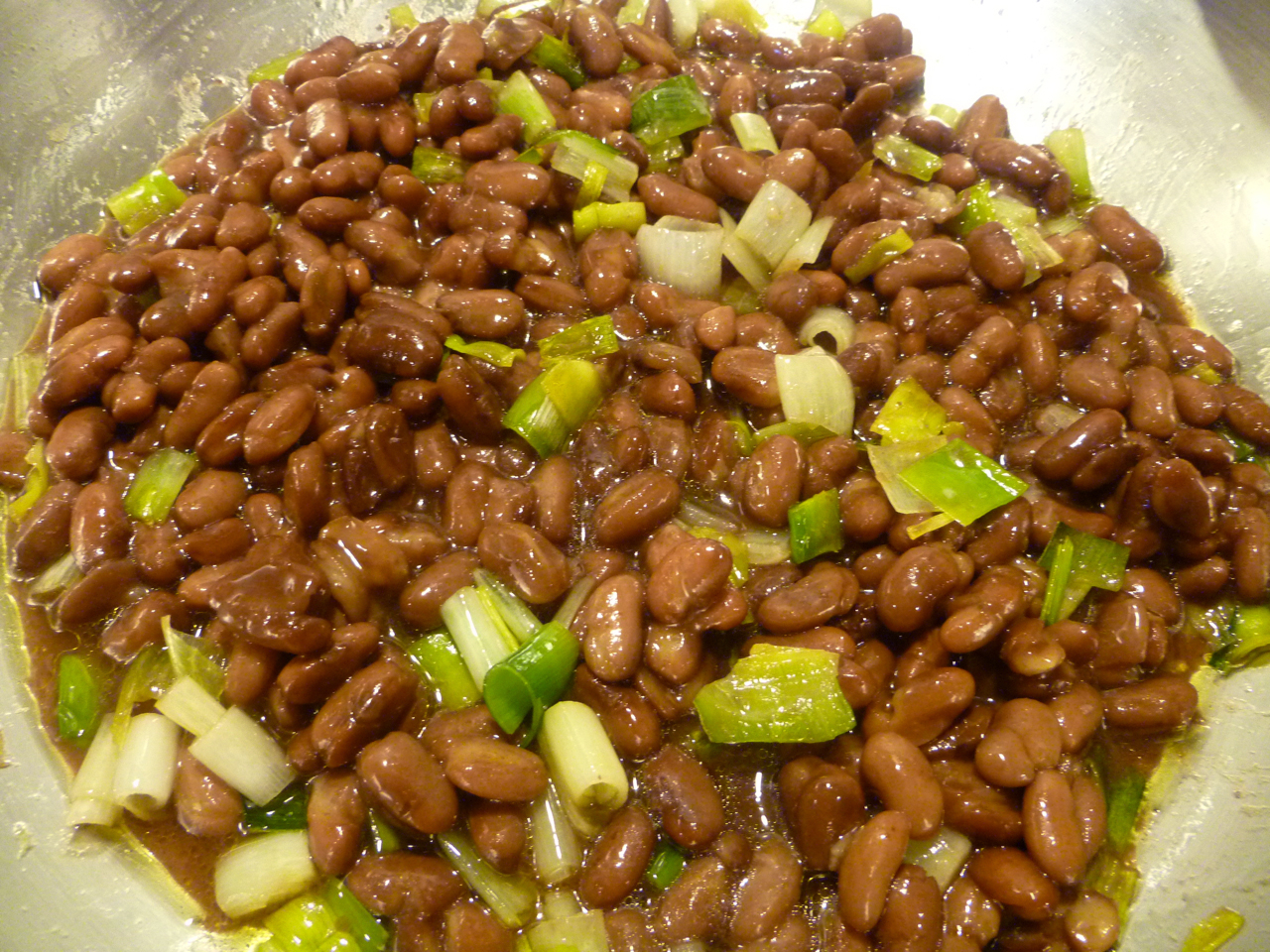
Rather than garlic, I used leeks slowly sauteed in olive oil, into which I stirred my soft cooked beans. Then, because this dish seemed to be journeying from the eastern Mediterranean toward the Iberian Peninsula, I finish off the pureed paste with a splash of sherry vinegar and a dusting of smoked paprika. The final dish tasted almost like pâté, rich and flavorful, with a hint of sherry. It made a nice dip for raw vegetables and a great lunch spread on fresh bread accompanied by fruity salads. 


Arikara Almond Bean Spread


1 cup Arikara beans (or substitute white kidney beans)
several sprigs of thyme
3 1/2 cups water
1 large or 2 medium leeks
4 Tbsp olive oil
1/2 cup whole almonds
2 tsp sherry vinegar
salt
smoked paprika for garnish


1. Rinse the Arikara beans and cook them on very low heat with about 3 1/2 cups of water, the thyme sprigs and a pinch of water until very soft, about four hours. Add more water during the cooking process if necessary and when the beans are done, add more salt to taste. 


2. Remove the root and green stem from the leek, slice lengthwise, and wash thoroughly. Cut into 1/2 inch slices. Heat a large skillet over medium low heat, add the olive oil, and saute the leeks for about 10 minutes, until they are very soft, but avoid browning them. Add the cooked beans and their cooking liquid and simmer with the leeks to meld the flavors and reduce the broth. The final mixture should have about about a half cup of syrupy liquid remaining. 


3. Meanwhile, toast the almonds in a dry skillet until fragrant. Transfer them to a food processor and pulverize into a fine meal. Add the leeks and beans and process for several minutes until smooth. Add the sherry vinegar and pulse. Taste and add more salt if necessary. 


4. Transfer to a bowl and dust with smoked paprika. Serve with fresh vegetables or crusty bread. 


Other recipes for locally grown beans
Barley and Cranberry Bean Soup with Kale
Bruna Bönor
Cranberry Beans and Collard Greens
Paprkia Chickpea, Delicata and Kale Salad
Pumpkin and Rio Zape Bean Soup
Vegetarian Bean Chili
Black Beans and Huevos Rancheros
Falafel and Grilled Zucchini
Lentil Caviar Salad with Poached Eggs
Coffee Braised Lamb Shanks and Arikara beans
Green Flageolet Bean and Tuna Salad
Creamy Green Flageolet Beans
Dutch Bullet Bean Soup with Indian spices
Arikara Beans with Tomatillo Pork
Ireland Creek Annie Baked Beans
Flageolet Bean Salad with Fennel, Orange, and Tapenade
Arikara Beans with Roasted Fennel and Peppers
Jacob's Cattle Bean and Ham Stew
Calypso Beans with Ginger and Black Mustard Seeds
Ireland Creek Annie bean bruschetta
Lemon and Herb Dutch Bullet Beans
Minty Green Flageolet Beans
Dutch Bullet Beans and Roasted Squash Soup
Rio Zape Beans with Toasted Chile Sauce
Arikara Bean Gratin
Calypso Bean and Leek Soup

Tuesday, February 14, 2012

Red Lentil Soup


I would have liked to have cooked up a fancy Valentine's Day meal, complete with this fabulous chocolate mousse, but busy travel itineraries, wintertime colds, and the demands of supervising the production of 99 cards, thwarted such plans. 


In the end, it seemed fitting to turn to a well-loved family standby. This is a fragrant red lentil soup from Melissa Clark, that is delicious in its original incarnation, but which I've tinkered with over the years, adding more spices along with the cumin, and some sun dried tomatoes to the broth, and blending it into an intoxicatingly velvety and exotic puree.


I'm a little surprised that this spicy soup is a favorite with my chile-averse children. I think my daughter likes its smooth, silky texture, and my son probably finds the flavors familiar because I ate this so often when he was in utero. They also both love being able to play with the accompanying lemon wedges to their hearts' content. And I love being able to serve a simple, heart-warming meal that elicits repeated requests for additional helpings. Really, what better Valentine's Day gift is there than having one's food, cooked with love, be greeted with heartfelt enthusiasm? 


Red Lentil Soup
Adapted from Melissa Clark
serves four


3 tablespoons olive oil
1 medium onion, peeled chopped
2 carrots or 1 carrot and 1 parsnip, peeled and diced
2 Tbsp tomato paste
2 tsp ground cumin 
1/2 tsp smoked paprika
1/4 tsp chipotle chilli powder 
1/4 tsp cayenne
salt to taste
1 quart chicken or vegetable broth plus two cups water (or use six cups water with 2 tsp Better than Boullion)
1/4 cup chopped sun dried tomatoes
1 1/4 cup red lentils
lemon wedges for garnish
chopped fresh cilantro for garnish

1. In a large pot, heat 3 tablespoons oil over medium high heat until hot and shimmering. Add onion and sauté until it starts to caramelize, then add the diced carrot (and parsnip if using) and sauté until soft, about 5 minutes.

2. Add spices and sauté until fragrant.  Then stir in the tomato paste, and sauté for 2 minutes longer.

3. Add lentils and coat in spice paste.  Then add broth and water and sun dried tomatoes. Bring to a simmer, then partially cover pot and turn heat to medium-low. Simmer until lentils are soft, about 30 minutes. Taste and add salt if necessary.

4. Using an immersion or regular blender or a food processor, purée the soup until smooth.

5. Reheat soup if necessary, then serve with lemon juice and cilantro.