Showing posts with label Indian. Show all posts

Saturday, October 26, 2019

Instant Pot Collar Green Sag Paneer


Tomorrow promises to be a beautiful autumn day, so be sure to visit the Fairmount Neighborhood Farmers Market for its last day of its tenth season. The market will be open between 10 am - 2 pm on the corner of Agate and 19th Ave. You'll find plenty of fall fruits and vegetables from Camas Swale Farm.


Camas Swale has abundant collard greens, which are delicious roasted in a low oven. I also like to use them in sag paneer, as opposed to spinach which I find always cook down to a tiny portion that fits into a single dessert bowl. This time I converted my my stovetop recipe for the Instant Pot, which was able to reduce an enormous pile of leaves into a fragrantly spiced puree in a matter of minutes.


Instant Pot Collard Green Sag Paneer

2 bunches collard greens (or kale), washed, stripped from stems, and chopped
4 cloves garlic, diced
1 to 2 fresh hot chili, diced
4 roma tomatoes, chopped
1 medium onion, diced
1/2 inch ginger root, diced
2 Tbsp grape seed or canola oil
1 1/2 tsp cumin seeds
1/2 tsp black mustard seeds
1/2 tsp fenugreek seeds
salt to taste
8 ounces paneer cheese, chopped into small cubes
2 tsp ground coriander
1 tsp garam masala

1.Turn the instant pot to sautee. When warm, add the oil, and then the cumin seeds, mustard seeds, and fenugreek and let them sizzle for a few seconds until fragrant. Add the chopped onion, garlic, ginger, and chili pepper and cook, stirring for a couple minutes. Then add the chopped tomato and cook down a couple minutes longer until they have collapsed and released their juice. Press cancel.


2. Add the collard greens or kale and a generous pinch of salt and give the contents a stir. The liquid from the tomatoes and rinsed greens should be enough, but if it seems very dry, add a Tbsp or two of water. Seal the lid, and program the instant pot to cook at high pressure for 2 minutes. When the cooking is complete, press cancel and carefully release the pressure. 

3. Stir in the coriander and garam masala. Use an immersion blender to puree the greens into a smooth paste. Taste and season with salt if needed. Stir in the cubed paneer cheese and transfer to a serving bowl.

Saturday, July 13, 2019

Yogurt Basted Roast Chicken with Turnips and Onions


This Sunday come to the Fairmount Neighborhood Farmers Market between 10 am - 2 pm at the corner of Agate and 19th Ave for all your summer produce from Camas Swale Farm and pastured meat and poultry from Fair Valley Farm and Fog Hollow Farm.


Last weekend I made an Indian-inspired feast with our farmers market bounty. I marinated four Fog Hollow Farm chicken legs in a spiced yogurt baste and then roasted them above a layer of magenta and white baby turnips and green onions.  


The turnips and onions were extra rich and flavorful from their long dousing in chicken juices and yogurt sauce. We devoured them along with saffron rice, this Instant Pot lentil dal, cucumber raita, and homemade naan. 


Yogurt Basted Roast Chicken with Turnips and Onions
4 chicken legs (thighs and drumsticks) on 1 whole chicken cut into pieces
1 bunch green onions, root ends trimmed
~18 baby turnips, stem and root ends trimmed

marinade
6 garlic cloves, minced
1/2 inch nob ginger root, peeled and minced
zest of one lemon
juice of one lemon
1/2 cup plain yogurt
1 Tbsp olive oil
1 tsp kosher salt
1/4 tsp cayenne pepper
1 tsp ground cumin
1/2 tsp ground coriander
1/2 tsp garam masala

1. Mix together all of the ingredients of the marinade. In a large bowl, coat the chicken pieces in the marinade and allow to sit for at least two hours or overnight, refrigerated.

2. Preheat the oven to 375 degrees. Line the bottom of a large baking pan with the green onions and baby turnips. Place a baking rack over the vegetables and place the chicken pieces on top. Bake for about 35 minutes until the chicken is cooked through (with an internal temperature of 165 degrees). Baste the chicken pieces with some of the remaining marinade in the bowl halfway through the cooking.

3. Remove the roasting pan from the oven and turn on the broiler. Set the chicken and the roasting rack off to the side and remove the roasted vegetables to a serving bowl. Return the roasting rack and chicken to the pan and baste the chicken with the remaining yogurt marinade. Transfer under the broiler and cook for a few minutes until the skin becomes nicely charred. Transfer the chicken to a serving platter and serve with the roasted vegetables.

Monday, June 9, 2014

Bread Starter Naan


The Bread 101 class I have been co-teaching all term finished up today with a plethora of home baked breads (this Chad Robertson recipe) from the starters that the students have nurtured all term. It was impressive to see the quality of bread produced and to hear about the students' resourcefulness in creating these loaves. A common theme was the challenge of fitting the demands of bread baking into a busy weekend preparing for final exams. Over the weekend, I experimented with using my starter to make naan, which proved to be a successful vehicle for sour, fermented flavors and a speedy enough bread to be able to mix the night before and serve for lunch the next day.


I started with a naan recipe from Neelam Batra and incorporated a portion of my sourdough starter, as well as a small amount of commercial yeast. The dough already contains yogurt (I used Nancy's with live cultures), which gives it a fermented sourness, so the grain-fermenting wild yeast and bacteria of my starter seemed right at home in the mix.  


A dough I started in the evening with an active culture (fed that morning) doubled in bulk overnight. A half hour before noon, I preheated my oven to 500 degrees with a cast iron griddle positioned below the heating element. Rolled out flats of dough placed on this hot griddle puffed up in a matter of minutes, and were eaten hot out of the oven, slathered with melted butter. In the meantime, my students were still busy building the gluten networks of their country loaves. The final results were well worth all the hours of work, but this naan is a good alternative when time is short.


Bread Starter Naan
makes 8 to 10 naan
1/3 cup active starter (90 g)
1/8 tsp yeast
1 tsp sugar
1/4 cup water (or yogurt whey)
1/2 cup yogurt (125 g)
2 cups flour (250 g) (I used 1 cup unbleached white and 1 cup red fife)
2 Tbsp vegetable oil (I used canola)
1/4 tsp salt or to taste (I used ~3/8 tsp)
more flour for dusting
melted butter or ghee for brushing on the cooked naan

1. Start with an actively growing culture that you've fed no more than 12 hours earlier. Mix together the starter, yeast, sugar, water, yogurt, oil, and flour until just incorporated. Allow to sit for half an hour (autolysis period). Then add the salt and kneed the dough until it is soft and elastic. Cover the dough in a clean bowl and let it rise for at least 6 hours to overnight, until it has doubled in size. 

2. Heat the oven to 500 degrees and place a cast iron skillet directly under the heating element. Divide the dough into 8 to 10 portions and roll into flat ovals about 6 inches in length. Place the dough flats onto the skillet and bake for about two minutes until they puff up. Flip and bake for another minute on the second side, until they are slightly browned. Remove from the oven and brush with melted butter as the next batch bakes. Eat warm.

Notes: there are a lot of ways to modulate the sourness of the final bread. For less sour naan, do one or more of the following: use a more recently fed culture, double the amount of commercial yeast, double the amount of sugar, use water instead of whey for the liquid, decrease the dough fermentation time.

Saturday, May 18, 2013

Kohlrabi Poriyal


Kohlrabi are not a common sighting at our markers or dinner tables, especially ones with full leafy plumage like these fine specimens from Sweet Water Farm, available for a couple of weeks through Eugene Local Foods. However, during childhood visits to my grandmother's home in Germany as a child, we often ate tender cubes of a root vegetable in cream sauce, a dish simply called "gemüse" (vegetable), that only years later I realized was kohlrabi. Today its distinctive taste still has a Proustian effect on me. 


Recently, a friend shared his favorite childhood recipe for kohlrabi, prepared in the style of a South Indian dry curry, or poriyal. Recreating it required a trip to Vishnu Indian Imports for urad dal (small lentils that are fried in hot oil with mustard seeds at the beginning) and vangibath powder (a spice mix with ground lentils and chilies that coats the cubed vegetables at the end). The final dish was delicious. And for a nose to tail approach to these unshorn kohlrabi, I cooked the leaves like cabbage in this Madhur Jaffrey recipe with fennel seeds, along with masooar dal and kale with paneer. Even in its South Indian guise, the kohlrabi tasted a little bit like childhood summers. 


Kohlrabi Poriyal

3-4 smallish kohlrabi (or use turnips, parsnips, potatoes or other hard vegetables)
2 Tbsp neutral oil (such as canola)
1 tsp urad dal
1 tsp black mustard seeds
pinch of asafoetida (optional)
1 1/2 tsp vangibath (vangi bhath) powder, MTR brand recommended 
1/2 tsp turmeric
salt to taste

1. Peel the kohlrabi generously with a paring knife to remove any woody bits, leaving just the smooth white interior. Cut into 3/8 inch cubes.

2. Heat a large, shallow frying pan over medium heat. Add the oil and when it is hot, add the urad dal. Cook the dal, stirring, until it is a toasted brown. Add the black mustard seeds and a pinch of asafoetida, if using, and cook for a few seconds until the seeds start to pop. Add the kohlrabi pieces and season with salt.

3. Saute the kohlrabi, stirring occasionally, until it is almost tender. When the kohlrabi is close to done, stir in the vangibath powder and turmeric. Cook for a couple more minutes until the kohlrabi is tender. Enjoy. 

Thursday, December 6, 2012

Cardamom Lamb Koftas with Almond Yogurt Sauce


If you've never tried it before, you should grind some whole cardamom pods with a mortar and pestle. Inside those green shells are little black kernels that release a potent fragrance when pounded. I used some freshly ground cardamom to flavor lamb kofta made with our frozen stash of ground lamb from Fair Valley Farm. (Fair Valley Farm will be at 19th and Agate this Sunday Dec. 9th from 2-3 PM; if you'd like to stock up on their pasture-raised meat contact them ahead to place your order.) 


I packed these cardamom patties with minced shallot and cilantro and rolled them in garbanzo bean flour, which I had on hand and had seen used in a beef kofta recipe from Madhur Jaffrey. To simmer the kofta, my husband made a simplified version of a nut yogurt sauce from Neelam Batra's 1,000 Indian Recipes with garam masala. The final dish was deliciously rich  and flavorful, complemented by our stash of homemade Indian pickled beans and carrots and Asian pear chutney. I'm looking forward to making these kofta again, after we restock our freezer on Sunday, to help brighten Oregon's drizzly winter with warm spices.


Cardamom Lamb Kofta with Almond Yogurt Sauce
serves four
for the kofta
1 lb ground lamb
2 tsp whole green cardamom pods
1 shallot or 1/2 small onion
1/4 cup cilantro leaves
plenty of black pepper
salt
~1/4 cup garbanzo bean (chickpea) flour for dusting
1 Tbsp ghee or butter

for the sauce
1/2 cup whole almonds
2 tsp garam masala
1 shallot or 1/2 small onion
2 garlic cloves
2 cups plain yogurt
1 cup water
1 Tbsp ghee or vegetable oil
salt

1. To prepare the kofta, grind the cardamom pods in a mortar and pestle. Strain out the green shells and put the ground kernels in a mixing bowl. Mince the shallot and cilantro leaves and add to the bowl, along with the ground lamb. Add a generous grinding of black pepper and salt. Mix the meat to combine all the ingredients. Then form into 2 inch-long, finger-shaped patties (recipe will make about eight) and roll them to coat lightly in garbanzo bean flour. To help them hold together during cooking, chill the patties while you prepare the yogurt sauce.

2. To prepare the sauce, toast the almonds in a dry skillet for a few minutes until fragrant. In a food processor or electric spice mill, grind the almonds with the garam masala into a fine meal. Finely chop the shallot and garlic. In a food processor, or by hand, whisk together the yogurt and water until smooth. Heat a large pan and add 1 Tbsp ghee or oil. Add the shallot pieces and cook over medium high heat until they are very brown and crispy. Add the garlic, cook for a minute, then add the almond spice mix and saute for another minute until fragrant. Now turn up the heat and slowly add the yogurt mixture to pan, stirring vigorously to prevent it from curdling. Bring the sauce to a boil, then lower the heat and allow it to simmer for 10 to 15 minutes while you brown the kofta. 

3. Heat a skillet over medium high heat and add 1 Tbsp ghee or butter. Place the kofta into the hot pan and let them cook, undisturbed, until they are nicely browned. Rotate and cook on the other sides until they are browned all over (about 10 minutes). Now transfer them to the simmering yogurt sauce and allow them to cook through, about another 10 minutes. Taste and season the sauce with salt as needed. Serve the kofta and sauce over rice.

Thursday, November 8, 2012

Red Lentil Pilaf with Cumin Seeds


With the end of daylight savings time, the early darkness creates a new sense of urgency about getting dinner on the table in the evening. This lentil dish from Neelam Batra's 1,000 Indian Recipes cooks up in a matter of minutes after you enter the house, as long as you remembered to rinse and soak a cup of red lentils in the morning. I used Camas Country Mill's red chief lentils, and was delighted to find that the soaking nicely brought these orange beauties out of their brown outer skins. You can stock up on local lentils at the Fill Your Pantry event November 18 from noon to 4 PM at Sprout (pre-order here). This recipe uses an unusual cooking technique in which the liquid from the softened soaked lentils is evaporated quickly over high heat with a minimum of stirring, creating a fluffy pilaf rather than a creamy soup. Here's the game plan: first thing when you get home, start a pot of rice cooking. Then mince some ginger and start toasting the spices for the lentils. Once you get the lentils cooking down in their water, warm some flatbread, cut up some crunchy carrots and peppers, put out some condiments like chutney, yogurt, and Indian pickles, and then sit down to enjoy a satisfying vegetarian meal.


Dry-Cooked Red Lentils with Cumin Seeds (Sookhi Dhullt Masoor Dal)
adapted slightly from Neelam Batra's 1,000 Indian Recipes

1 cup red lentils, rinsed well (such as Camas Country Mill's red chief lentils)
1 1/2 cup water
1/4 cup cooked and minced beets (optional, used to give the lentils a red hue)
2 Tbsp vegetable oil
3 to 5 dried red chile peppers, such as chile de arbol
1 1/2 tsp cumin seeds
1 Tbsp peeled minced ginger
2 tsp ground coriander
1/2 tsp ground cumin
1/2 tsp garam masala
1/2 tsp salt, or to taste
1/4 cup freshly chopped cilantro
1 Tbsp fresh lime or lemon juice
4 scallions, finely sliced

1. Combine the lentils, water, and beets (if using) in a bowl and allow to soak 2 hours or longer.

2. Heat the oil in a large skillet over medium high heat.Cook the chile pepper until they puff up, about 1 minute. Add the cumins and let them sizzle for a few seconds. Add the ginger and stir for about a minute. Add the coriander, ground cumin, and garam masala and cook for a few seconds until fragrant.

3. Add the lentils with their soaking water and the salt and cook over high heat until the water has evaporated and the lentils are tender, about five minutes (taste and add a little more water if you need to). Stir a few times with a fork just to fluff, but take care not to break the lentils.

4. With a fork, gently mix in the citrus juice and chopped cilantro, transfer to a serving bowl, sprinkle with the chopped scallions, and serve.

Sunday, March 4, 2012

Stir-Fried Brussels Sprouts with Seeds


Just a couple days after our snow dusting, spring is suddenly here. In Hendricks Park, early rhododendrons were in full bloom behind the winter hellebores. 


But it always takes a little longer for the local spring vegetables to catch up with the spring flowers. In the meantime, to satisfy one's craving for bright, fresh flavors after the long, comforting braises of winter, one needs to be creative with winter gems like these delicate purple and green brussels sprouts from Open Oak Farm.


Inspiration came from a delicious Madhur Jaffrey recipe I recently discovered for cabbage stir fried with fennel seeds and Indian spices. I love cabbage braised with mustard seeds, but Jaffrey's stir fry keeps the seeds crisp and bursting with flavor. I tried a version with these brussels sprouts and the resulting dish, full of fennel flares and bright lemon, was as fresh and fragrant as a springtime stroll through the park.


Stir-Fried Brussels Sprouts with Seeds
inspired by Madhur Jaffrey

1 pound brussels sprouts
1 small onion
2 Tbsp neutral oil such as grape seed
1 tsp cumin seeds
1 tsp sesame seeds
1 tsp black mustard seeds
1/2 tsp fennel seeds
1/8-1/4 tsp cayenne pepper
salt to taste
1 Tbsp fresh lemon juice

1. Rinse the brussels sprouts, trip off their stems, and slice into disks. Peel and dice the onion.

2. Heat a large skillet over medium high heat and add the oil. When it is hot, add all the seeds and cook for about 30 seconds until the sesame seeds start to pop. Immediately add the onions and cook for about 5 minutes until they are soft and glassy. Add the brussels sprouts and stir fry, turning frequently, for about 10 minutes until they are cooked through and a little charred but not soggy. Season with salt and cayenne to taste. Turn off the heat and stir in the lemon juice. Enjoy.

Tuesday, August 9, 2011

Saag Paneer Salad


At the Fairmount Neighborhood Farmers market, these brilliant red cherry tomatoes from Songbird Farm


and bright green bietola greens from SLO Farm brought to mind a favorite Indian dish, saag or palak paneer. I have a go to quick palak paneer recipe from Neelam Batra's 1000 Indian Recipes that is more of a stir fry than the traditional stewed vegetable dish (which I've tinkered with before in a version with kale). 


With ingredients this fresh, however, it seemed a shame to cook them at all, which inspired me to make a saag paneer salad. I chopped up the bietola leaves, halved the cherry tomatoes, and tossed them with lemon juice, salt, and pepper.


Then I toasted some fenugreek, cumin, and black mustard seeds in hot oil and cooked them with minced ginger, garlic, and jalapeno, and cubed paneer cheese (available at Market of Choice). I layered the flavorful cheese onto the greens and served it immediately as a refreshing accompaniment for grilled tandoori chicken (prepared with a whole fresh chicken from Out of Our Coop). The hearty bietola greens stood up well to the cheese dressing, and the salad was still delicious for lunch the next day.


Saag Paneer Salad


  1. Wash the bietola or spinach, slice the leaves into 1/4 inch strips, and discard the stems. Wash and halve the cherry tomatoes. Toss the greens and tomatoes with the lemon juice, salt, and freshly ground black pepper in a large serving bowl.
  2. Seed the jalapeno. Peel the ginger and the garlic. Mince all three finely (you could do this in a food processor or mini-chopper). Chop the paneer cheese into 1/4 inch cubes. Chop the white and tender inner green leaves of the green onion into narrow rings.
  3. Just before you are ready to serve the salad, heat the oil in a skillet over medium high heat. When the oil is hot, add the black mustard seeds, fenugreek, and cumin seeds and let them sizzle for 1 minute. Add the jalapeno, ginger, and garlic mix and cook for a minute. Add the paneer cheese cubes and a pinch of salt and saute for a minute. Add the green onions and cook for a minute. Add the garam masala and saute for a final minute, until the cheese is well coated with the spices and the oil is bubbling and fragrant.
  4. Pour the spiced cheese cubes and oil over the greens and tomatoes. Toss and serve.

Friday, January 21, 2011

Calypso Beans with Ginger and Black Mustard Seeds


These black and white calypso beans from Lonesome Whistle Farm are so striking that they inspired me to create an entire black and white meal, like the Ascott opening race scene from My Fair Lady. 


I've been reading more recipes for Indian bean dishes and noticed that many of them, rather than starting with aromatics sauteed in oil to create a broth for the beans, instead simmer the beans first and then finish them off with a tarka, or sizzling topping of oil, spices, and aromatics. For the calypso beans, I decided to simmer them in coconut milk, similar to these red lentils, and then finish them with a tarka of ginger and black mustard seeds.


In a slow cooker I combined the beans, some chopped white onion, minced garlic and ginger, ground cumin and coriander, coconut milk, and water. A traditional Indian dal would cook the beans until they are very soft, but for these calypsos I cooked them just until tender, which I noticed was just at the point when their black coloring lightened to brown.


Then I prepared a rich tarka of diced ginger and black mustard seeds sauteed in butter, and stirred this into the beans. To accompany them, I prepared some black and white rice (wild rice stirred into jasmine). And for a vegetable side, roasted cauliflower. The final meal wasn't as starkly black and white as George Cukor's sets, but the contrasting flavors and textures were delicious. The fragrant coconut milk and punch of ginger nicely complimented the potato flavor of the calypso beans without overpowering them, and these went well with the nutty rice and roasted cauliflower with caramelized onions.


Calypso Beans in Coconut Milk with Ginger and Black Mustard Seed Tarka

2 cups (1 lb) calypso beans, rinsed
1 white onion, chopped
1 inch ginger root, peeled and minced
5 cloves garlic, peeled and minced
2 tsp ground cumin
2 tsp ground coriander
1 14 oz. can coconut milk
2 1/2 cups water
salt to taste

for the tarka
1 Tbsp butter or vegetable oil
1 inch ginger root, peeled and finely diced
1 tsp black mustard seeds

1. In a slow cooker or stovetop pot, combine the beans, onion, ginger, garlic, spices, coconut milk and water and cook with low heat, stirring occasionally (if using a slow cooker, swish the pot around rather than open the lid) until the beans are soft and have just turned from black to brown. In my slow cooker, the beans were done after 3 hours on the low setting.

2. To prepare the tarka, heat the butter or oil and saute the ginger and mustard seeds over medium-low heat for at least five minutes until the mixture is fragrant. Stir into the beans and serve.


Other heirloom bean recipes:

Friday, November 5, 2010

Harvest's End


The Fairmount Neighborhood Farmers Market is officially over for the year. Many, many thanks to all the people who made it possible: DeeAnn Hall of Eugene City Bakery for getting the project off the ground, Ned Forman for organizing it, Sun Automotive for generously donating space, Zambuko Marimba for their vibrant music, Allea Martin, Dan Armstrong and Lynne Fessenden for help and advice, and most especially the farmers and vendors who brought delicious local, sustainable food to our neighborhood. I look forward to seeing everyone back again next spring. In the meantime, I'll have a regular supply of heirloom beans from Lonesome Whistle Farm's CSA, which will be the inspiration for recipe postings through the chilly winter months.


For now, I wanted to share a few more recipes inspired by the bountiful produce from the Fairmount Farmers Market and motivated by my desire to master some Indian dishes. My friend Vidusha taught me this recipe for red lentils with coconut milk that has become a household standby, and is especially delicious when prepared with farm fresh roma tomatoes and onions.

  
Following Vidusha's directions, I simmer red lentils with water and coconut milk.


After they have cooked for about 20 minutes, I add chopped tomatoes and onion, and cumin, coriander, and tumeric.


While these cook down, I saute more chopped onion in butter with mustard seeds. If I could track down some fresh curry leaves, I would add these as well. Once the lentils are very soft and the onions nicely caramelized, I stir in the onions to finish off the dal.


At the last Fairmount Farmers Market, SLO Farm had some lovely kale, as well an tomatoes and onions. I decided to try adopting a recipe for quick palak paneer from  Neelam Batra's 1000 Indian Recipes, using kale instead of spinach. 


My husband was skeptical, but he had to admit that it was really tasty, seasoned with garlic, chili, cumin seeds, mustard seeds and fenugreek. 


After cooking the kale until it was tender, I finished off the dish by stirring in diced paneer cheese (which you can find in the cheese section of the Market of Choice), ground corinader, and garam masala.


To accompany our meal, we prepared naan, following a recipe from Neelam Batra's 1000 Indian Recipes. The dough is made with some yogurt, which gives it a nice soft texture, and it's good to let it rise for 3 or more hours. Then my daughter rolled out ovals, while we heated a cast iron griddle under the broiler.  


When it was good and hot, we placed several pieces of dough onto the skillet, 


and within a minute, they puffed up (it seems like magic every time).


They just need to bake a couple minutes on each side and are delicious brushed with melted butter.


Together the dal and kale with paneer made a delicious feast.


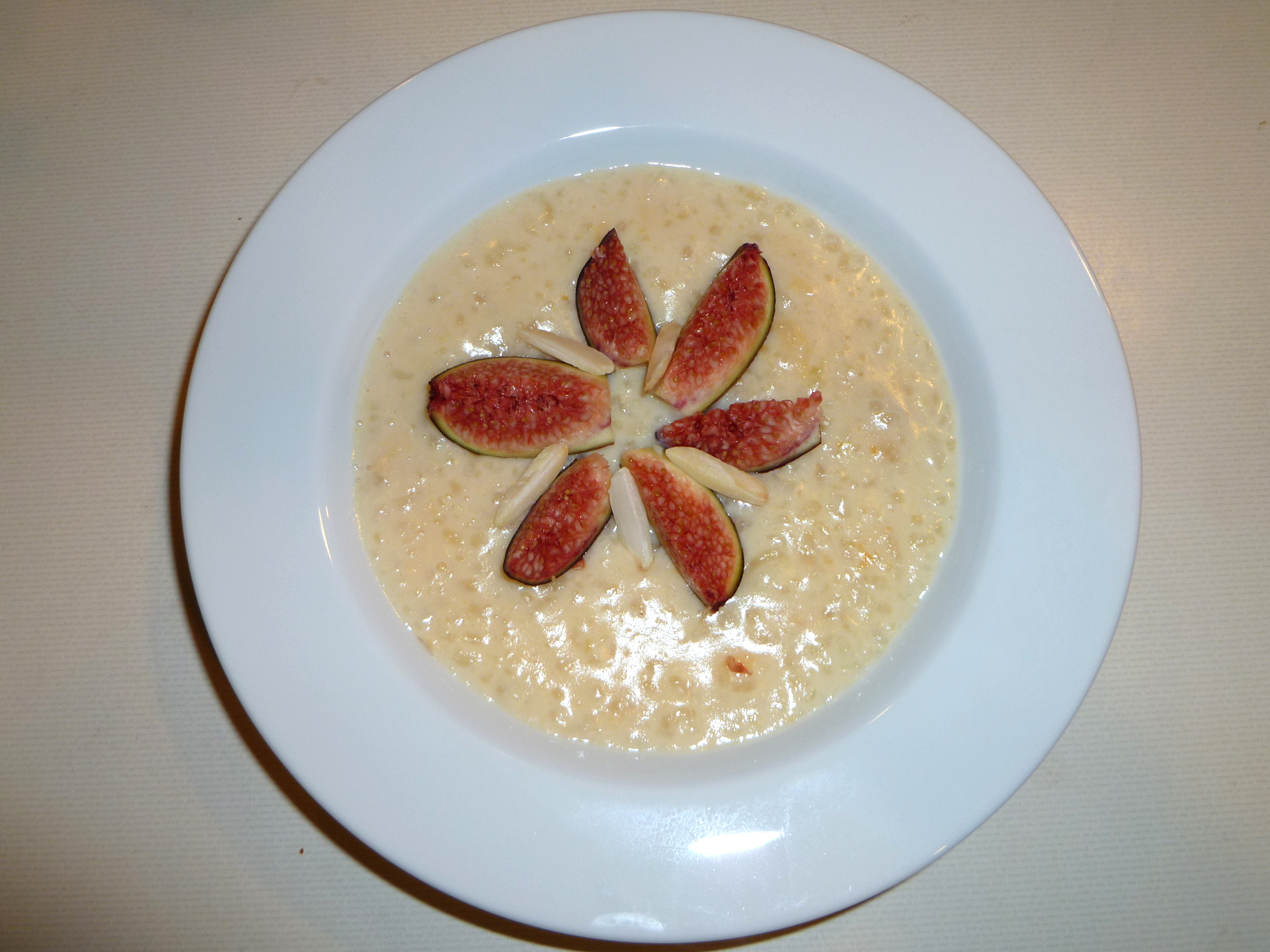
To finish off the meal, we had rice pudding, or kheer, which is the simplest dessert ever when prepared in a slow cooker, and was lovely with fresh figs and toasted almond slivers.


Vidusha's Coconut Milk Masooar Dal

1 ½ cup red lentils
1 ½ cup water
1 can coconut milk
2 roma tomatoes, chopped
1 medium or 2 small onions, diced
1 tsp each coriander ground, cumin, tumaric
salt to taste
1 Tbsp butter
1 tsp black mustard seeds
fresh curry leaves

1. Simmer lentils with water and coconut milk for about 20 minutes.

2. Add chopped tomatoes, half of the chopped onion, and coriander, cumin, and tumeric. Keep simmering for about another 20 minutes until very soft, adding more water if it gets too dry.

3. Meanwhile saute the rest of the chopped onions in butter over low heat with the mustard seeds and fresh curry leaves (if you can find them) until they become very soft and caramelized. Stir into dal and serve.


Kale with Paneer Cheese

1 bunch kale, washed, stripped from stems, and chopped
2 cloves garlic, diced
1 fresh hot chili, diced
2 roma tomatoes, chopped
1 small onion, diced
2 Tbsp grape seed or canola oil
1 tsp cumin seeds
1/2 tsp black mustard seeds
1/2 tsp fenugreek seeds
8 ounces paneer cheese, chopped into small cubes
2 tsp ground coriander
3/4 tsp garam masala

1. Heat oil in a large skillet. Add cumin seeds, mustard seeds, and fenugreek and let them sizzle for a few seconds until fragrant. Add chopped onion, garlic, and chili pepper and cook, stirring for a couple minutes. Then add the chopped tomato and cook down a couple minutes longer. 

2. Add the kale and cook until softened, about 7-10 minutes, adding a little water if necessary to prevent it from getting too dry. Stir in the paneer cheese, coriander, garam masala, and salt and keep cooking until the kale is the desired tenderness. If you would like to make a quick palak paneer, substitute two bunches of spinach for the kale and reduce the cooking time.


Tandoori Naan
from Neelam Batra

2 tsp dry yeast
1 tsp sugar
1/4 cup warm water
1/2 cup yogurt
2 Tbsp vegetable oil
2 cups flour (I use 1 cup white and 1 cup whole wheat white flour)
1/4 tsp salt

1. Dissolve the yeast and sugar in warm water and let sit for 5 minutes. Mix in yogurt and oil. Gradually mix in flour and kneed the dough until it is soft and elastic. Cover the dough (I like to wrap it up in a large silicone mat) and let it rise until it has doubled in volume, at least 3 hours.

2. Heat the broiler and place a cast iron skillet directly under the heating element. Divide the dough into 10 or 12 portions and roll into flat ovals. Place the dough onto he skillet and bake for about a minute until it puffs up. Flip and bake for about a minute on the second side, until they are slightly browned. Brush with melted butter.


Slow Cooker Kheer

1 quart whole milk
1/3 cup rice
1/2 cup sugar
6 cardamon pods
generous pinch of saffron

Combine in a slow cooker and cook on low for about 6 hours until all the milk has absorbed and the pudding has thickened. If a skin forms on the top, you can just stir this into the pudding at the end.

Enjoy!