Friday, March 11, 2011

Dutch Bullet Bean Soup with Indian Spices


With the rainy weather persisting, I was craving a a bean soup with a rich pallet of spices. A bunch of spinach in the refrigerator and a box of strained Pomi tomatoes in the pantry were the inspiration for an rich bean soup with Indian spices. Of our selection of CSA heirloom beans from Lonesome Whistle Farm, the small Dutch bullets seemed the best suited for this dish, recalling small mung beans. 


For spices, I used a combination of cumin, coriander, turmeric, and mustard powder. I sauteed chopped onion in oil until soft, then added the spices until fragrant, and then diluted in the strained tomatoes, 2 cups of Dutch bullet beans, and 6 cups of water. 


I left the beans to simmer on very low heat, partially covered, until they were tender, about 3 hours.


When we were almost ready for dinner, I washed and chopped the spinach,


and prepared a tarka of hot oil with fenugreek seeds, cumin seeds, and cayenne pepper. With the heat off, I stirred in the spinach and spicy oil, and we enjoyed warm bean soup to ward off the drizzly weather. 


Dutch Bullet Bean Soup with Indian Spices

2 cups Dutch bullet beans, rinsed 
1 small onion, chopped
4 Tbsp neutral oil such as grape seed, divide use
26 ounces strained tomatoes (such as Pomi)
2 tsp ground cumin
1 tsp turmeric
1 tsp ground coriander
1 tsp mustard powder
salt to taste
6 cups water
1 bunch spinach
1 tsp fenugreek seeds
1 tsp cumin seeds
1/2 tsp cayenne pepper, or to taste

1. Sautee the chopped onion in 2 Tbsp oil until soft. Add the ground cumin, turmeric, coriander, and mustard powder and cook for about a minute, until fragrant. Add the strained tomatoes, beans, and 6 cups of water. Allow to simmer on very low heat, partially covered, until the beans are soft, about 3 hours. Add plenty of salt to taste.

2. Rinse and densely chop the spinach leaves. Heat the remaining 2 Tbsp of oil in a small pan and add the fenugreek and cumin seeds and cayenne and cook until fragrant. Turn of the heat for the beans and stir in the fresh spinach and spicy oil. Enjoy.


Other recipes for heirloom beans:


Sunday, March 6, 2011

Lonesome Whistle Farmers in the NYTimes


Kasey White and Jeff Broadie of Lonesome Whistle Farm are featured in this New York Times article about A New Generation of Farmers. Congratulations!

Thursday, March 3, 2011

Arikara Beans with Tomatillo Pork


This past weekend I think I officially became a bean snob. I recreated a favorite dish I've made many times before, inspired by a recipe from Rick Bayless' Mexican Everyday cookbook, in which you slow cook pork in tomatillos, and finish with canned white bean. But this time I added Arikara dried beans from Lonesome Whistle Farm during the cooking process, and the end result was so delicious, that I can't imagine ever using canned bean in this dish again. 


Rick Bayless' dish involves a sauce of chopped tomatillos, flavored with cilantro, garlic, and pickled jalapenos. I added a fresh jalapeno as well for a little extra heat. 


In the Bayless version, he seasons cubed pork with Worcestershire sauce, which gives a nice depth to the tart tomatillos. Rather than bothering to cube the pork, I've taken to cooking an entire pork roast until it becomes soft enough to shred like pulled pork. I start by coating the roast with Worcestershire sauce and searing it for a few minutes, before layering in the tomatillos, cilantro, garlic, and jalapenos. This time I cooked the dish on high in a slow cooker for 3 hours, at which point the tomatillos had cooked down into a remarkably liquid sauce. 


I removed the pork to a plate and used a immersion blender to puree the sauce. Then I added back the pork and 2 cups of rinsed Arikara beans. I set the slow cooker on low and continued the cooking process for another 3 hours. 


I anticipated having to add in some water, but in fact the beans stayed submerged in their tart green bath and plumped and softened nicely. 


When the beans were tender, I removed the pork and shredded it. Then I recombined everything and it was ready to serve.


To accompany the tomatillo beans and pork, I prepared a slaw that incorporated the crunchy sweetness of carrots, refreshing taste of jicama, brightness of red peppers, and sharp bite of radishes against a background of slightly pickled cabbage.


One could prepare the vegetables by shredding them in a food processor, but I think they retain a more satisfying crunch when julienned by hand. To contrast the cilantro flavor in the beans, I used fresh chives, which also hold up better over time (even using a very small cabbage, this recipe made enough for several days).


The final meal was a delicious improvement on a family favorite.


Arikara Beans with Tomatillo Pork

2 cups Arikara beans rinsed, or substitute white kidney beans
1 lb fresh tomatillos
1 bunch cilantro
6 garlic cloves
4-6 pickled jalapenos
1 fresh jalapeno (optional)
1 1/2 lb boneless pork roast 
~2 Tbsp Worcestershire sauce
1 Tbsp neutral oil such as grapeseed
salt to taste

1. Douse the pork with Worcestershire sauce all over. Heat the oil and sear the pork on all sides until it starts to brown. Remove from heat and put in a slow cooker. Husk the tomatillos and cut them into chunks. Seed the fresh jalapeno and coursely chop both kinds of jalapenos, and the garlic cloves. Use scissors to cut off the leaves of the cilantro. Add all of these to the slow cooker, and cook on high for about three hours.

2. Remove the pork to a plate. Use an immersion blender to puree the tomatillo sauce until smooth. Add the beans and, if needed, enough water to ensure that they are submerged. Add back the pork and cook on low for about three hours, until the beans are soft.

3. Remove the pork and use a fork to shred. Salt the beans to taste. Stir in the shredded pork and keep warm. Serve on warm tortillas with a crunch slaw.


Crunchy Carrot, Jicama, and Radish Slaw


2 carrots
1 small jicama
12 radishes
½ red bell pepper
½ savoy cabbage
1 handful of chives, chopped
3 limes
½ cup rice vinegar
1 tsp sugar
¼ tsp red pepper flakes
3 Tbsp olive oil
salt to taste
  
1. Remove the outer layers of the cabbage if damaged, core and chop finely. In a small sauce pan combine the juice of 2 limes, rice vinegar, sugar, red pepper flakes, and salt to taste, and heat until the sugar and salt dissolve. Pour over the chopped cabbage, mix, and allow the cabbage to pickle for a few minutes while you prepare the other vegetables.

2. Peel the carrots and jicama and cut them into thin 1 inch long matchsticks. Top and tail the radishes and cut them into thin half moons. Cut thin lengthwise slices of pepper and cross-sect them into thirds. Combine the carrot, jicama, radish, bell pepper, with shopped chives, juice from one lime, olive oil, and salt to taste.

3. When you are ready to serve the slaw, stir the crunch carrots and company into the cabbage. Adjust seasoning to taste.


Other recipes for heirloom beans:


Monday, February 21, 2011

Ireland Creek Annie Baked Beans


I was a bit premature in heralding the beginning of spring. The day after my last post, the temperature plummeted and it snowed. Not much, but enough to make one want to turn on the oven and start cooking up a feast of warm comfort food. I've been making all sorts of bean dishes, but had not yet recreated the old classic from my hometown: Boston baked beans. Now that I've sampled our complete collection of heirloom beans from our Lonesome Whistle Farm CSA, I had the feeling that the Ireland Creek Annie beans, with their hearty but mild flavor and lovely brown sauce, would work well in this dish. 


I started by cooking some chopped bacon in a Dutch oven until just crispy. 


Then in about 2 tablespoons of the rendered bacon fat, I sauteed a diced onion, minced garlic, and some cumin, paprika, and brown sugar.


Meanwhile, I mixed up a sauce of ketchup, mustard, molasses, and vinegar, which I added to the pot, along with 4 cups of hot water and 2 cups of rinsed Ireland Creek Annie beans.


These went into a low 250 degree oven to bake, covered, for about 3 1/2 hours, alongside a roasting ham. Along the way, I also baked some acorn squash sprinkled with spices and toasted their seeds in some olive oil and salt. Once the beans were just soft, I salted them, uncovered the pot, turned up the oven to 400 degrees, and cooked them for another half hour until the bean liquid evaporated down to a syrupy, bubbling sauce, the ham glaze caramelized, and a pan of macaroni and cheese developed a toasted top of parmesan bread crumbs. We had quite a feast. The baked beans were delicious with just the right mixture of sweet and sour flavors.


Ireland Creek Annie Baked Beans

2 cups (1 lb) Ireland Creek Annie beans, or substitute light kidney beans
4 strips bacon
1 onion, diced
4 cloves garlic, minced
1 tsp ground cumin
1/2 tsp paprika
1 Tbsp brown sugar
1/4 cup ketchup
1 Tbsp mustard
1 Tbsp molasses
1/4 cup cider vinegar
4 cups water, heated
salt to taste


1. Preheat the oven to 250 degrees. Cut the bacon into small strips (most easily done with scissors) and saute in an over proof pot until the strips are fairly crispy. Reserve the bacon and drain off all but about 2 Tbsp bacon fat. Add the chopped onion and saute until soft. Add the garlic, cumin, paprika, and brown sugar and saute for another couple of minutes. Meanwhile, mix together the ketchup, mustard, molasses, and vinegar. Pour this mixture into the pot. Rince the mixing cup with some of the hot water and add this and the remaining water to the pot. Add the rinsed beans and bacon bits, mix and heat the contents of the pot to a simmer. Then cover the pot and transfer to the oven.


2. Cook the beans in the oven for about 3 1/2 hours, stirring occasionally, until they are soft, but not falling apart. Add a little more water if they get too dry during the cooking process. Raise the heat to 400 degrees, remove the top, add salt if needed, and cook for another half hour until the sauce becomes thick and caramelized.


Other recipes for heirloom beans:
Flageolet bean salad with fennel, orange, and tapenade
Arikara beans with roasted fennel and peppers

Thursday, February 17, 2011

Flageolet bean salad with fennel, orange, and tapenade


The sun is shining, crocuses are blooming, oranges are in season, and salad for dinner seemed like a welcome change of pace. Inspired by my fennel flavored Arikara beans, I decide to try the same cooking technique with some delicate green flageolet beans from Lonesome Whistle Farm.


I tossed the beans in a mustard vinaigrette with sliced fresh fennel bulb and sections of blood oranges, and layered this onto some salad greens dressed with a lemony vinaigrette.


To accompany the salad, I prepared an olive tapenade that incorporated some of the same flavors as the salad, with fennel fronds and citrus zest. 


The tapenade was delicious on olive bread from the Eugene City Bakery and provided a bold, salty contrast to the mild, crunchy and fruity salad. It almost feels like spring. And as an extra treat, this recipe was selected as an editor's pick on Amanda Hesser's Food52 website.


Flageolet bean salad with fennel, orange, and tapenade

For the salad
2 cups green flageolet beans, rinsed
1 fennel bulb
2 blood oranges or 1 large naval orange
mixed salad greens
1 tsp dijon mustard
1 1/2 Tbsp sherry vinegar
1 Tbsp lemon juice
4 Tbsp olive oil
salt and pepper to taste

For the tapenade
1/2 cup pitted olives
2 Tbsp capers
1 clove garlic
handful of fennel fronds
handful of parsley leaves
pinch of red pepper flakes
2 Tbsp olive oil

1. Rinse the beans and put them in a slow cooker or a pot with 4 cups of water. Rinse the fennel bulb and cut off the stalks. Reserve the bulb and a handful of the most tender fronds. Layer the remaining stalks and fronds over the beans. Simmer the beans on low for about 3 hours, swirling occasionally to mix, until they are tender but still firm (on the stovetop this may take less time and require additional water). Remove the fennel stalks and season generously with salt. Drain 2 cups of the cooked beans for the salad and reserve the remaining beans for another use.

2. Prepare the tapenade. If you're like me and don't like raw garlic, heat the garlic clove in a dry, hot skillet, until it is blacked in patches on the outside and soft and fragrant, or skip this step. In a food processor, combine the olives, capers, garlic clove, reserved fennel fronds, parsley, 1 tsp of zest from both the lemon and orange, red pepper flakes, and 2 Tbsp olive oil. Pulse briefly into a coarse, chunky paste.

3. Prepare the bean salad. Cut the fennel bulb into thin slices. Peel the oranges, slice, and quarter each slice. In a medium bowl whisk together the mustard, 1 Tbsp vinegar, 2 Tbsp olive oil, and salt and pepper. Toss in the cooked beans, fennel and orange slices and mix well. Adjust seasoning.

4. Prepare the salad. In a large bowl, whisk together 1 Tbsp lemon juice, 1/2 Tbsp vinegar, 2 Tbsp olive oil, salt and pepper. Toss in the salad greens until well coated. Layer on the bean salad, and serve with tapenade and bread. If you like, you can prepare tapenade toasts under the broiler.


Other recipes for heirloom beans:

Friday, February 11, 2011

Shredded Carrot and Parsnip Curry Soup


It's that time of year when you just can't stand to wear the same old sweaters you've been wearing all winter or eat the same old soup. I was craving something different. No more mild, creamy, pale purees. I wanted bold flavors, bright colors, and a different texture.  


Somehow I got the idea to try a soup of shredded vegetables with lots of ginger and a colorful confetti of carrots and parsnips. 


The shredded vegetables brought to mind the garnish of Southeast Asian dishes, which directed the soup's flavor toward a curry, with lots of cumin, some curry powder and paprika, and a dash of cayenne.


To thicken the soup, I used a third of a cup of brown rice, which I sauteed in a generous amount of oil before adding the spices and shredded vegetables. When they had started to soften, I added in a can of coconut milk and 4 cups of vegetable stock, and then let the soup simmer on low heat for about 45 minutes until the rice and vegetables were soft and the flavors had melded.


The final soup were deliciously fragrant, spicy, and colorful with a pleasant texture. A welcome antidote for the end of winter blahs. 


Shredded Carrot and Parsnip Curry Soup


4 carrots
3 parsnips
2 inch piece of ginger
2 cloves garlic
1/3 cup brown rice
3 Tbsp neutral oil, such as grape seed
2 tsp ground cumin
1 tsp curry powder
3/4 tsp paprika
1/4 tsp cayenne
1 15 oz. can coconut milk
4 cups vegetable broth
salt to taste


1. Peel the carrots, parsnips, and ginger. Shred them in a food processor. Mince the garlic.


2. Heat the oil in a soup pot. Stir in the brown rice and saute until it starts to smell toasted. Add in the spices and garlic and saute for about a minute. Add the shredded vegetables and ginger and stir for a few minutes until well coated with spices. Add the coconut milk and vegetable broth. Bring to a simmer, then turn the heat to low and cook, partially covered, for 45 minutes to an hour until the rice is soft. Adjust seasonings. Enjoy.

Saturday, February 5, 2011

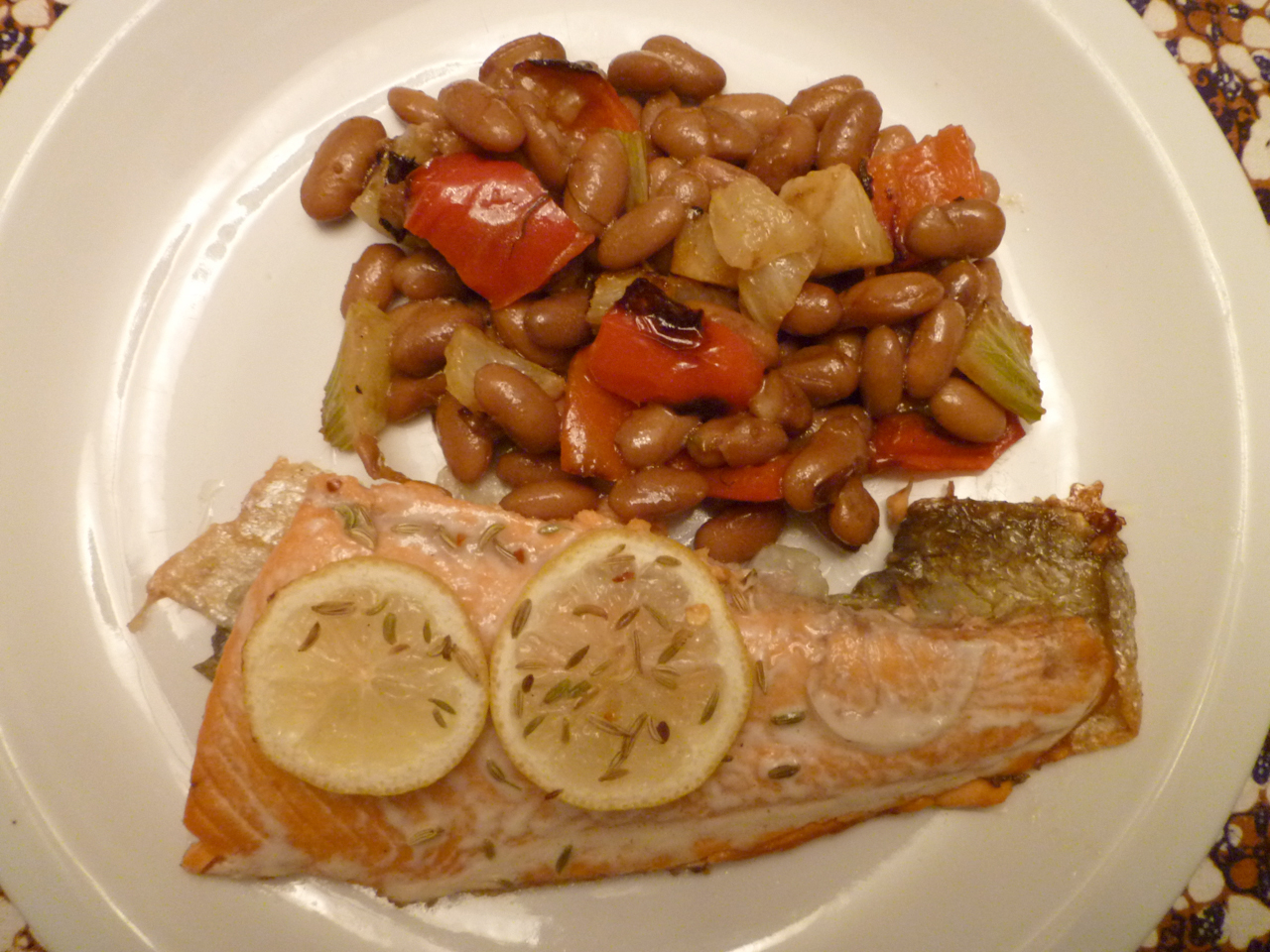
Arikara Beans with Roasted Fennel and Peppers


These Arikara beans from Lonesome Whistle Farm were cultivated by the Dakota Arikara Native Americans and provided sustenance for Lewis and Clark during their Voyage of Discovery. Thomas Jefferson grew them at Monticello, and described them as "one of the most excellent we have had." I had a hankering for roasted fennel, and I thought these creamy beans would make a most excellent accompaniment. 


Rather than discard the fennel fronds, I decided to add them to the bean pot and allow them to infuse the beans as they simmered. I've been cooking dried beans in a slow cooker without any presoaking with excellent results. These ones were tender but still firm after three hours.


I had a red pepper, which I decided to roast along with the fennel bulb for additional caramelized flavor. I tossed these in a generous amount of olive oil, salt, and pepper, and roasted them in a hot oven, making sure to stir occasionally once they started to brown. Meanwhile, I drained about 4 cups of the fennel-infused Arikara beans, reserving the remaining beans and broth for another use.


I removed the pan from the oven when the fennel and peppers were beginning to char and immediately tossed in the beans so that they became coated in the hot oil and caramelized juices of the vegetables.


These beans, with their subtle fennel flavor contrasting with the bold, caramelized vegetable chunks, were a delicious accompaniment to some Salmon People salmon, stashed away from last summer's market, seared  in a hot skillet and finished in the oven.


Arikara Beans with Roasted Fennel and Peppers


2 cups (1 lb) Arikara beans rinsed, or substitute small white kidney beans
4 cups water
1 fennel bulb
1 red pepper
2 Tbsp olive oil
salt and pepper to taste


1. Rinse the fennel bulb and cut off the fronds. Combine the beans and water, layer on the fennel fronds in a slow cooker, and cook on low for about 3 hour until the beans are soft but still firm. The beans can also be cooked on the stovetop, but would require less time and may need more water. When they are cooked, remove the fennel fronds and salt generously. Strain about 4 cups of cooked beans, reserving the remain 2 cups and the bean liquid for another use.


2. Preheat the oven to 450 degrees. Cut the fennel bulb and red pepper into smaller chunks. Toss in a large ovenproof pan with the olive oil and salt and pepper. Roast for about 25 minutes, stirring every 5 to 10 minutes. When the vegetables are soft, caramelized, and starting to char, remove the pan from the oven and immediate stir in the 4 cups of drained beans, scraping the bottom of the pan to mix in all of the caramelized vegetable bits.


Other recipes for heirloom beans:
Jacob's Cattle bean and ham stew
Calypso beans with ginger and black mustard seeds
Ireland Creek Annie bean bruschetta
Lemon and herb Dutch bullet beans
Minty green flageolet beans
Dutch bullet beans and roasted squash soup
Rio Zape beans with toasted chile sauce
Arikara bean gratin
Calypso bean and leek soup