Saturday, October 27, 2012

Chia Seed and Buckwheat Pancakes


Lately I've come across a number of recipes using chia seeds (the very same seeds that produce the green afros on chia pets), and I was curious to taste them. I found that they have a nutty, slightly smokey flavor that reminded me of buckwheat, which inspired me to pair the two together in these pancakes that have become a new family favorite.


If you get the impression from this blog that my family eats a lot of pancakes, you are correct. We like them hardy with oatmeal and pears, rich with cottage cheese, and pillowy with teff and ricotta. These chia seed and buckwheat ones are deliciously light and flavorful. The soaked chia seeds soften up and absorb liquid, like tapioca, binding together this buttermilk batter such that it needs just a minimum amount of flour, making for tender cakes. I've used half buckwheat and half white wheat flour, but I imagine one could use another flour, like sorghum or teff, instead of wheat for a gluten-free version. This morning we
 topped them with blackberry sauce and hardy kiwis from our garden. And, caught up in the spirit of Halloween, we had a few jack-o-lantern kiwis and pancake people with huckleberry smiles. 


Chia Seed and Buckwheat Pancakes
(makes about 32 pancakes)
1/4 cup chia seeds
2 cups buttermilk
2 eggs
3 Tbsp canola oil
1/2 cup buckwheat flour
1/2 cup white flour
1 tsp baking powder
1/4 tsp baking soda
pinch of salt
butter for cooking pancakes

1. In a large mixing bowl, combine the chia seeds with the buttermilk. If you'd like the seeds to be very soft, you can soak them in the buttermilk overnight, but they will soften up quite nicely in about ten minutes (about the time it takes from starting the batter to making your first pancakes). Mix in the eggs and canola oil.

2. In a separate bowl, mix together the remaining dry ingredients. Then gently mix the dry ingredients into the wet ingredients until they are just combined.

3. Heat a griddle or large skillet (I prefer cast iron) over medium heat. Melt a small pad of butter to grease the surface. Spoon out dollops of batter with a soup spoon and allow to cook until the batter loses some of its raw pale color and bubbles stay fixed. Flip with a spatula and cook for a minute on the other side. Both sides should be nicely browned. Transfer to a warm plate, and cook the rest of the batter. Enjoy with fruit toppings and maple syrup. 

Friday, October 19, 2012

Calypso Bean Dip with Romesco Sauce


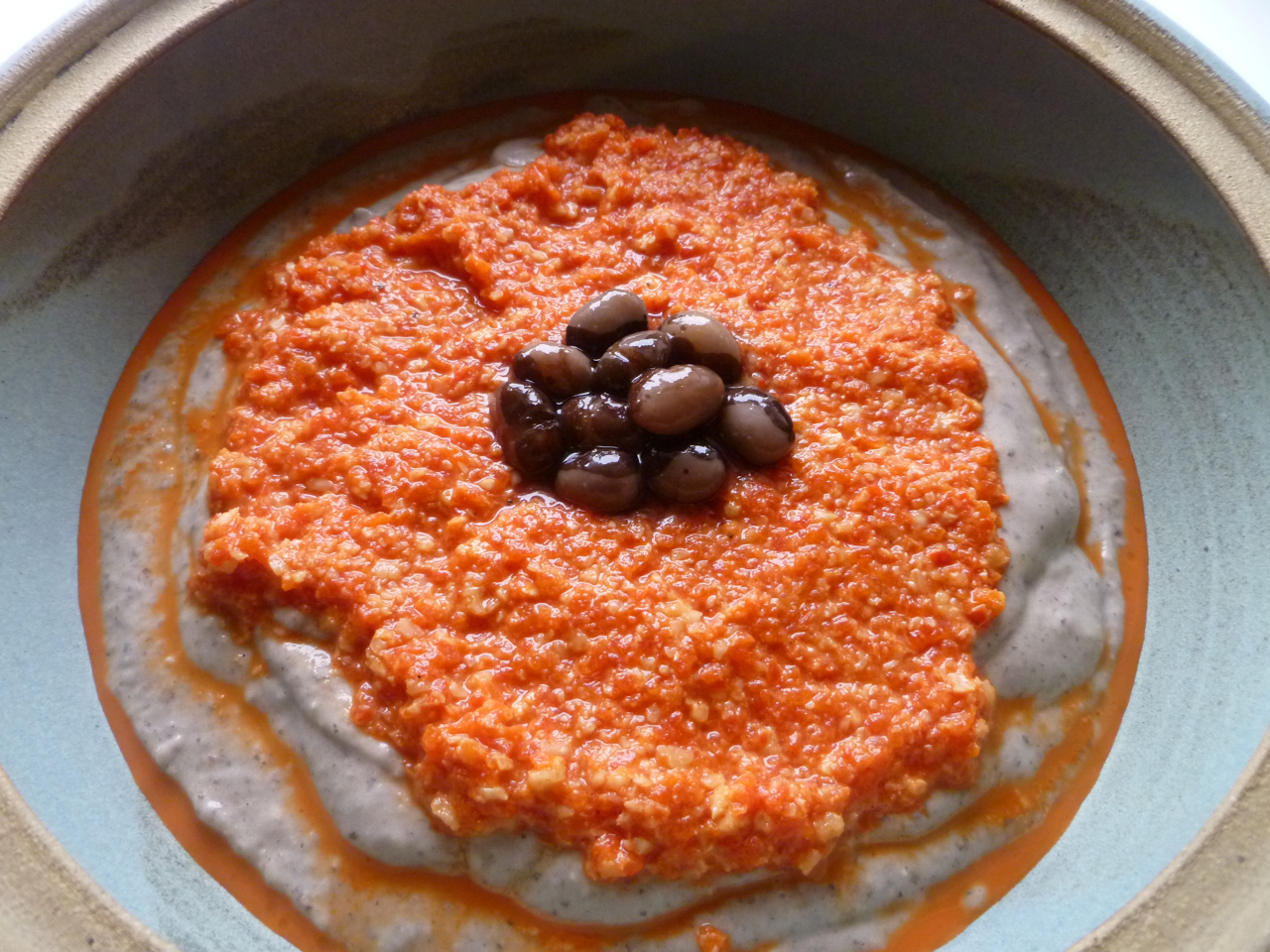
Good bell peppers are still plentiful this time of year. I used some of these rosy beauties from Open Oak Farm in a roasted pepper romesco sauce layered on top of a creamy dip made from Lonesome Whistle Farm's calypso beans, following this recipe for Ireland Creek Annie Bean Bruschetta, but minus the toasting. The romesco sauce gives a pretty autumnal blush to the bean spread, and together they make a tasty appetizer served with thinly sliced baguette from Eugene City Bakery.


Bean dip
2 cups cooked calypso beans, or your favorite bean variety
5-6 garlic cloves
~1/4 cup olive oil
salt to taste.

Romesco Sauce
1 red pepper
1/3 cup slivered almonds
1/2 tsp smoked paprika
1 Tbsp red wine vinegar
salt to taste

1. To make the bean dip, roast the garlic cloves in a dry skillet or in the oven until the skin is blackened in spots and the garlic is soft. Combine all of the ingredient in a food processor (save a few beans for garnish) and blend until very smooth. Add salt to taste.

2. To make the romesco sauce, char the red pepper over an open flame or in the oven until the skin is blackened. Place in a bowl covered with a plate to steam off the skin. Toast the almond slivers and place in a food processor. Scrape off the charred skin from the pepper, remove stem and seeds and add to food processor. Add remaining ingredients and process into a course paste.


3. Spread the bean dip into a shallow bowl and layer over the romesco sauce. Enjoy with thin slices of baguette, warm pita wedges, crackers, or crudites. 

Saturday, October 13, 2012

Kimchi and Bo Ssam


It's official: the Fairmount Neighborhood Farmers Market is over for the season. You can catch some culinary action on the corner of Agate and 19th this evening at the Dia de los Muertos Festival from 4 to 9 PM. If you are suffering from a sense of loss over the end of your summer Sunday routine and the passing of the sunny days, here is my prescription: be sure to preserve some of the last of fall's harvest for the rainy days ahead.


With a final collection of Sweetwater Farm's produce -- arrowhead cabbage, kohlrabi, carrots, celery, green onions, and garlic -- I made a delicious version of this kimchi


We turned on the oven for the slow roasting of a sweet and salty slathered pork shoulder, following this Bo Ssam recipe from David Chang's Momofuku


And we enjoyed these delicious lettuce leaf packets of tender pork and rice topped with a little bit of preserved harvest.


Kimchi and Bo Ssam
Kimchi
follow this recipe from Momofuku, using the following vegetables:
1/2 small cabbage, cored and chopped into small strips
1 kohlrabi, peeled generously and cut into matchsticks
2 big or 4 small carrots, scrubbed and cut into matchsticks
2 big or 4 small celery stalks, sliced into 1/4 inch slices

Bo Ssam
follow this recipe from Momofuku. We used a smaller pork shoulder, but cooked it for almost as long to achieve the "souffle effect" when the meat is falling apart and the fat starts to bubble.

Serve on tender lettuce leaves with a scoop of white rice, a couple forkfuls of pork, and a generous dollop of kimchi.

Sunday, October 7, 2012

End of the Season Cottage Cheese Pancakes


Frosty nights have set in and the longterm forecast predicts rain for next weekend, so today is likely to have been the last Fairmount Neighborhood Farmers Market of the season. Many thanks to Sweetwater Farm and Fair Valley Farm for bringing us their delicious foods all summer long and ensuring a successful third season for the market. If you were lucky enough to pick up some of Sweetwater Farm's jam (or better yet, earn a jar through their punchcard system), here is a recipe for cottage cheese pancakes onto which you can slather their fine preserves.


These pancakes are an old family specialty. They are not just regular pancakes with a dollop of cottage cheese, but rather a heaping amount of cottage cheese with a sprinkle of flour. The recipe comes from Michael Fields, a chef my mother admired in the 1970's, but who died early in life, likely from the quantity of butter and eggs he consumed while testing his recipes. These pancakes, for example, called for a dozen eggs and a stick and a half of butter. Our family's version scaled these back, but we kept Fields' recommended toppings of jam and powdered sugar. Sweetwater Farm's strawberry preserves made these an extra treat.


Cottage Cheese Pancakes
makes about 24 pancakes

16 oz. cottage cheese
3 eggs
2 Tbsp butter for the batter and more for cooking the pancakes
1/2 cup flour
pinch salt
jam and powdered sugar for topping

1. Melt the butter in a large batter bowl. Mix in the cottage cheese and then the eggs. Lightly incorporate the flour and salt.

2. Heat a skillet over medium heat. Melt a small pad of butter across the surface of the skillet and then spoon out  a tablespoon at a time of batter, evenly spaced. This batter takes a little longer to cook than regular pancakes and it works best if you keep the pancakes on the smallish side (about 2 1/2 inches in diameter). Watch them carefully. When ready to flip, the batter should take on a slightly darker, less shiny sheen, and bubbles at the edges should remain fixed. When you flip the pancakes, they should be nicely browned. Cook them on the second side until they are similarly browned and then transfer to a warm serving plate or a baking sheet in a low oven while you cook the rest.

3. Serve warm with fruit jam (I recommend Sweetwater Farm's strawberry spread) and a dusting of powdered sugar.

Friday, October 5, 2012

Quinoa, Wheat Berry and Chickpea Salad


This Sunday's Fairmount Neighborhood Farmers Market you can look forward to the following offerings from Sweetwater Farm and Fair Valley Farm:
  • Delicata and Sweet Dumpling winter squash (try this salad)
  • Cauliflower (delicious roasted)
  • Stanley prune plums and Italian prune plums
  • cantaloupe and honeydew mellons
  • Carrots and radishes (try these buttery radishes with mint)
  • One last round of green beans (from SLO Farm
  • variety of tomatoes; 10 lb flats of San Marzano romas for $15 (freeze for winter)
  • variety of sweet and spicy peppers
  • kohlrabi (delicious raw in a lemon caper salad)
  • variety of cabbages, kale, collards, and greens (make some collards and beans)
  • broccoli and eggplants (try a roasted salad)
  • lettuces and baby lettuce salad mix
  • zucchini and summer squash
  • variety of potatoes including bargain bags of red potatoes
  • sweet onions, green onions, garlic, and leeks
  • fresh herbs, including basil, cilantro, dill, thyme, oregano, and sage
  • tomato sauce and pesto
  • naturally fermented pickles, dilly beans, and sauerkraut
  • homemade jams (delicious in crepes)
  • Scottish oats (make this teff oatmeal)
  • a selection of dried beans and grains from Camas Country Mill
  • pastured chicken (try spatchcocked)
  • pastured pork: pork chops, shoulder roasts, and ham roasts
  • pastured lamb: ground, rib chops, and leg roasts (grill some burgers)

A few weeks ago we enjoyed a belated anniversary meal at Koho Bistro and had a delicious dish from the "Leaves and Weeds" section of their menu that I was inspired to recreate at home as the backdrop for Sweetwater Farm's sweetest of sweet cherry tomatoes. Their dish was a veritable cornucopia of grains and beans: wheat berries, barley, wild rice, quinoa, and chickpeas, all cooked separately with care. 


Without a restaurant kitchen staff on hand, I decided to pare this list down to chickpeas, a small grain like quinoa, and a large grain like wheat berries or barley. Despite the stack of pots it generates, this combination is definitely worth making and having on hand as an inspiration for quick lunches and dinners. The chickpeas are earthy, and the wheat berries and quinoa adds different notes of nuttiness. Like the Koho dish, I added toasted almonds and goats cheese. For this summer version, I added parsley and cherry tomatoes, but the grains and chickpeas lend themselves to infinite variations through the seasons, such as with roasted eggplant or delicata squash, or the green bean and red pepper version below. I'm sure these beans and grains complement each other nutritionally, but what's impressive is how well they complement each other in flavor, making a whole that is greater than the sum of its parts. 


Quinoa, Wheat Berry, and Chickpea Salad

cherry tomato version
1 cup dried chickpeas
1 cup dried wheat berries (or substitute barley)
3/4 cup dried quinoa
1/2 cup toasted slivered almonds
1 pint cherry tomatoes, rinsed
6 ounces feta cheese, cut into small cubes
1/2 cup flat parsley leaves, rinsed and chopped
1 large lemon
1 tsp pomegranate molasses or a honey
2 Tbsp rice wine vinegar
1/4 cup olive oil
salt to taste

1. If you remember, soak both the chickpeas and the wheat berries separately overnight. For each, rinse and place in 2.5 cups fresh water and simmer on low until they are soft, about 2 hours. Salt generously and strain if necessary. Cook the quinoa on a low simmer in 1.5 cups fresh water for about 15 minutes until it releases its halos and the water is absorbed. Combine the cooked chickpeas and grains into a large serving bowl.

2. Mix the dressing of juice and zest from one lemon, pomegranate molasses or honey, rice wine vinegar, olive oil, and salt to taste. Toss into the grains.

3. Toss the dressed grains with the slivered almonds, cherry tomatoes, feta cheese and parsley leaves. Taste and adjust seasoning. Enjoy the salad on its own, or layer it on tender greens.


green bean and red pepper version
for slivered almonds, substitute whole almonds toasted with 1 Tbsp olive oil and 1 tsp smoked paprika;
for cherry tomatoes, substitute cooked green beans and chopped roasted red peppers;
for the feta cheese, substitute cubed aged gouda
for the rice wine vinegar, substitute sherry vinegar, and omit the molasses or honey.

Thursday, September 27, 2012

Pasta Primavera for the Fall


This Sunday's Fairmount Neighborhood Farmers Market you can look forward to the following offerings from Sweetwater Farm and Fair Valley Farm:
  • variety of sweet and spicy peppers (try in the pasta sauce below)
  • variety of tomatoes including bargains on flats of San Marzano romas
  • Akane apples and Asian pears from SLO Farm (time for roasted apple sauce)
  • Italian prune plums (make a galette)
  • cantaloupe and honeydew mellons
  • kohlrabi, baby carrots, cabbage, and celery (make some kimchi)
  • kale and collards (try as a kale salad)
  • broccoli and eggplants (try a roasted salad)
  • lettuces and baby lettuce salad mix
  • zucchini and summer squash
  • variety of potatoes including bargain bags of red potatoes
  • sweet onions, garlic, leeks, and fennel
  • fresh herbs, including basil, cilantro, dill, thyme, oregano, and sage
  • tomato sauce and pesto
  • naturally fermented pickles, dilly beans, and sauerkraut
  • homemade jams (delicious in crepes)
  • Scottish oats (make this teff oatmeal)
  • a selection of dried beans and grains from Camas Country Mill
  • pastured chicken (try spatchcocked)
  • pastured pork: pork chops, shoulder roasts, and ham roasts
  • pastured lamb: ground, rib chops, and leg roasts (grill some burgers)


Last week we used our left over Fair Valley Farm ham in pasta primavera, which was my family's extra special meal when I was growing up, reserved for birthdays and other celebrations. The funny thing about pasta primavera is that it's not really a springtime dish; it really makes more sense at the height of summer or during the warm fall days we've been so lucky to have. The classic Le Cirque recipe calls for asparagus and tomatoes, which are never going to be at their peek at the same time. Instead, I recommend pairing summer's sweet cherry tomatoes with the best produce of the season. I used leeks, sweet peppers, zucchini, and summer squash, all fresh from Sweetwater Farm.


Le Cirque's recipe uses a cream sauce, which my family's version omitted. Instead, the core flavor I remember from my childhood recipe was cubed ham and walnuts. Here I experimented with turning the walnuts into a very loose pesto for the kids, and the adults got the added layer of sauteed goodies (while the kids ate their veggies raw on the side). And because this was an extra special dish, we made fresh pasta to soak up all the flavors of the end of summer's harvest.


Pasta Primavera for the Fall

for the pasta
4 eggs
3 cups flour

Combine the eggs and flour in a food processor and mix until the dough starts to come together in a ball. Add a dribble of water if you need to. On a clean work surface, combine the dough into a log and cut it into about 12 pieces. Roll them out with a pasta maker (a fun task for kids) and cut them into fettucini. Cook the pasta in rapidly boiling, salted water for just a couple of minutes. Reserve a half cup of the pasta water if you need to moisten the sauce at the end. Drain the pasta and toss in a large bowl with the walnut sauce and toppings.

for the sauce
2 small or 1 large leek
2 medium bell peppers
2 small or 1 medium zucchini or summer squash
1 pint cherry tomatoes
1/2 cup cubed ham
1/4 cup white vermouth
1 cup walnut pieces
1 large garlic clove
1 cup basil leaves
~3/4 cup olive oil
salt and fresh ground pepper to taste
1/2 cup freshly grated parmesan cheese and more for passing around the table

1. Prepare all of the vegetables, rinsing them and cutting them into small bite-sized pieces, except for the cherry tomatoes which you will keep whole.

2. Peel and mince the garlic. Chop the walnut pieces into small pieces (I did this with a meat pounder). Alternatively, you could combine the garlic clove and walnuts in a food processor and pulse a few times.

3. Heat a large skillet over medium high heat. Add about a 1/4 cup of olive and when it is warm, add the garlic and walnuts to the oil and saute for a couple of minutes until they are fragrant, but before they start to burn. Transfer the walnut mixture to a large serving bowl that will hold all of the pasta. Add a 1/2 cup of grated Tear the basil leaves and toss into the bowl.

4. Wipe out the skillet and return to medium high heat. Add another 1/4 cup of olive oil. Add the chopped leaks and saute for a couple of minutes. Add the chopped peppers and saute for a couple of minutes. Add the chopped zucchini and summer squash with a generous pinch of salt and saute for a couple of minutes. Now add the ham for a minute, and then the cherry tomatoes. When the cherry tomatoes have just started to collapse under the heat, add the vermouth. Cook for another minute and then turn off the heat. Season with a generous amount of fresh pepper and salt to taste.

5. When the pasta is cooked, toss it in the bowl with the walnuts, parmesan cheese, and basil leaves and drizzle on about 1/4 cup olive oil. This is the point at which I removed some pasta for picky eaters/pesto purists/raw foodists. Then toss in all of the sauteed vegetables and ham. If the pasta seems dry, add a splash of reserved pasta water. Serve at once, with special occasion napkins and dishes.

Thursday, September 20, 2012

Kohlrabi, Lemon, Caper Salad and Roast Ham


This Sunday's Fairmount Neighborhood Farmers Market you can look forward to the following offerings from Sweetwater Farm and Fair Valley Farm:
  • variety of tomatoes including 10 lb flats of San Marzano romas for $15
  • Akane apples and Asian pears from SLO Farm (time for roasted apple sauce)
  • Italian prune plums (try some pickled)
  • cantaloupe and honeydew mellons
  • kohlrabi, baby carrots, cabbage, and celery (great in Pad Thai)
  • kale and collards (try as a kale version of saag paneer)
  • globe and Japanese eggplants
  • bargain bags of broccoli and red bell peppers
  • lettuces and baby lettuce salad mix
  • cucumbers, zucchini and summer squash
  • a variety of potatoes including bargain bags of red potatoes (try fried wedges)
  • sweet onions, garlic, leeks, and fennel
  • fresh herbs, including basil, cilantro, dill, thyme, oregano, and sage
  • tomato sauce and pesto
  • naturally fermented pickles, dilly beans, and sauerkraut
  • homemade jams (delicious in crepes)
  • Scottish oats (make this teff oatmeal)
  • a selection of dried beans and grains from Camas Country Mill
  • pastured chicken (try roasted with five spices)
  • pastured pork: pork chops, shoulder roasts, and 10% discount on ham roasts
  • pastured lamb: ground, rib chops, and 10% discount on leg roasts

There's a definite chill in the air these mornings and it's time to start turning our attention to some of the heftier fall vegetables. I want to make a plug for the kohlrabi, which can make a nice transition from summer to fall in this tangy salad. Kohlrabi are knobby and awkward-looking, but once you slice off their outsides (and do so generously to remove any woody parts), then they have a deliciously crunchy white interior with just a hint of sharpness to them. I found that they pair beautifully with a briny lemon and caper dressing.


This salad would make a perfect first course for a hearty meal of baked beans and roast ham, which we enjoyed recently with Farimount Neighborhood Farmers Market-sourced heirloom dried beans (King of the Early Beans variety) and Fair Valley Farm's pastured ham. You'll want to stock up on these ham roasts this Sunday, on sale at a 10% discount. Not only do they make a delicious meal, but the leftovers have infinite uses in stir fries, salads, crepes, stuffings, and soups.


Kohlrabi and Caper Salad
makes four small dinner salads

1 small kohlrabi
~16 tender lettuce leaves 

lemon caper dressing
1 Tbsp capers
zest and juice of 1 large lemon
1 heaping tsp mustard
1/4 cup olive oil

1. You can prepare the dressing by combining all the ingredients in a miniprocessor, or chop the capers by hand and whisk in the other ingredients. I like to zest the lemon with a microplane grater.

2. Cut the kohlrabi in half and peel very generously with a paring knife to remove any woody parts. Cut the peeled kohlrabi halves into very thin slices (or use a mandoline).

3. Wash the lettuce leaves and arrange on four salad plates. Spread over the kohlrabi slices. Pour a generous amount of the lemon caper dressing over the sliced kohlrabi. Enjoy.


Ham Roast
One ham roast (about 5 lb)
1 tsp whole cloves
1/2 cup mustard
1/2 cup brown sugar

Preheat the oven to 300 degrees. Mix together the mustard and brown sugar and slather it over the ham. Stud the ham with whole cloves. Place in a baking pan and roast at 300 degrees for about 20 minutes per pound of ham. At the same time you can cook these baked beans.

Thursday, September 13, 2012

Putting Away Tomatoes


This Sunday's Fairmount Neighborhood Farmers Market you can look forward to the following offerings from Sweetwater Farm and Fair Valley Farm:
  • bargain tomatoes (20 lb for $20 for many varieties, 10 lb for $15 San Marzano romas)
  • Akane apples and Asian pears from SLO Farm (add to a salad)
  • Italian prune plums (bake a galette)
  • cantaloupe and honeydew mellons
  • kohlrabi, baby carrots, and celery
  • kale and collards (try this kale pesto pizza)
  • eggplants and broccoli (try a roasted salad)
  • cucumbers and corn 
  • peppers both sweet and spicy (make a roasted vegetable barley risotto)
  • baby lettuce salad mix
  • zucchini and summer squash
  • red, white, and blue potatoes (make a frittata)
  • sweet onions, garlic, leeks, and fennel (make some pickles)
  • fresh herbs, including basil, cilantro, dill, thyme, oregano, and sage
  • tomato sauce and pesto
  • naturally fermented pickles, dilly beans, and sauerkraut
  • homemade jams (delicious in crepes)
  • Scottish oats (make this teff oatmeal)
  • a selection of dried beans and grains from Camas Country Mill
  • pastured chicken (try it spatchcocked)
  • pastured pork: bacon, ground pork, pork chops, shoulder roasts, ham roasts, spare ribs, and the best sausage for hash
  • pastured lamb: ground, stew meat, leg roast, rib chops, loin chops (try in gozleme)
A stop at the Market will be part of a busy day for University of Oregon students participating in the Office of Sustainability's Project Tomato. They will spend the week harvesting tomatoes at nearby farms and processing them into pizza sauce to be consumed in the University dining halls by their lucky classmates.


I did my own tomato processing last week, having snatched up a 10 pound flat of Sweetwater Farm's brilliant red romas. I followed these instructions for processing whole tomatoes, but rather than canning them, I took the easier route of freezing them in Ball plastic freezer jars. My flat of romas yielded four quart containers of whole tomatoes (each held about a dozen romas), plus a batch of tomato sauce and two sheets of slow roasted tomatoes. The whole ritual of coring and scoring, blanching and peeling, roasting and simmering, gave me immense satisfaction, and I can't wait to savor summer's flavors in soups, sauces and chilis over the winter.


Freezing Whole Tomatoes

Fresh, ripe tomatoes
Glass or plastic freezer jars (I packed ~12 romas per quart (32 fluid ounce) jar)

1. Boil water in a large pot.

2. Remove the tomato cores and score an X on the opposite end.

3. Set up a big bowl of ice water.

4. In batches of about a dozen, blanch the tomatoes in the boiling water for 1-2 minutes and then transfer them to the ice bath.

5. Remove the skins, which will have blistered, and pack them into the jars up to the fill line (leave some room to allow for them to expand when frozen).

6. Close the lids loosely and label. When the tomatoes are completely cooled, tighten the lids and freeze.

Thursday, September 6, 2012

Five Spice Chicken and Roasted Eggplant Salad


This Sunday's Fairmount Neighborhood Farmers Market will be extra fun because it coincides with Eugene Sunday Streets, but be forewarned that Agate will be closed to cars from 19th to 24th from noon to 4 PM.  You can look forward to the following offerings from Sweetwater Farm and Fair Valley Farm:

  • cantaloupe and honeydew mellons
  • Italian prune plums (bake a plum cake)
  • kohlrabi (delicious in salads)
  • baby carrots
  • eggplants (try the roasted eggplant salad below)
  • corn and cucumbers
  • tomatoes (20 lb for $20 for many varieties, 10 lb for $15 San Marzano romas) 
  • peppers both sweet and spicy (make this roasted pepper and fresh tomato pasta)
  • baby lettuce salad mix
  • zucchini and summer squash (try shredded)
  • green beans, yellow wax beans, and romanos
  • red, white, and blue potatoes
  • sweet white onions, garlic, fennel, and leeks
  • fresh herbs, including basil, cilantro, dill, thyme, oregano, and sage
  • tomato sauce and pesto
  • naturally fermented pickles, dilly beans, and sauerkraut
  • homemade jams
  • Scottish oats (try these Swedish pancakes)
  • a selection of dried beans and grains from Camas Country Mill
  • pastured chicken (try the five spice chicken recipe below)
  • pastured pork: bacon, ground pork, pork chops, shoulder roasts, ham roasts, spare ribs, and the best sausage for hash
  • pastured lamb: ground, stew meat, leg roast, rib chops, loin chops


Every recipe has its own story of its origins, when it was prepared, and who it nourished. This recipe for five spice roasted chicken and ginger scented rice comes from my friend Katharine, who I met with a group of new mothers through the well baby clinic at the PeaceHealth Birth Center when it was still at its old location in a charming Victorian on 12th Street. We all bonded over our concern for the Birth Center's future and, working together on this cause, became friends. Our children outgrew the scales at baby clinic, the new Birth Center was eventually built, and this recipe circulated among us. Katharine delivered it to Renee after the birth of her second daughter. Elly played with it, using wheat berries as a local substitute for rice. Now that we have a supply of delicious chickens from Fair Valley Farm at the Fairmount Farmers Market, I wanted to share this recipe with you.


First I bought a new pair of poultry sheers, since the last ones had been worn down by too many of my daughter's craft projects, and then I studied this excellent video on cutting up a whole chicken. Once the bird was disassembled, the rest was straight forward. I marinated the chicken pieces overnight, which allowed this dinner to come together easily on a weeknight. And while I had the oven on, I also roasted some eggplant and broccoli for a salad inspired by this one from Melissa Clark. The roasted eggplant is the heart of this salad, and you could substitute in roasted peppers or zucchini for the broccoli, or prepare it, like Clark does, was fresh cherry tomatoes. Enjoying this delicious meal and watching my son gnaw on a drum stick, I had to marvel for a moment at how the babies have grown since this recipe started circulating.


Five Spice Roast Chicken
from Katharine Gallagher
1 small chicken (2 to 3 lb), cut into pieces
4 garlic cloves, minced
2 Tbsp coarse kosher salt
2 Tbsp extra-virgin olive oil
1 Tbsp Chinese five-spice powder

2 onions, each cut into 16 pieces

1. Combine the garlic, salt, olive oil, and Chinese five-spice powder in a large bowl or bag for marinating. Add the chicken pieces; turn to coat. Cover and chill at least 1 hour or overnight.


2. Preheat the oven to 425. Arrange the onion wedges in a 13x9x2 inch baking pan. Arrange the chicken pieces, skin side up, on top of the onions. Roast until the chicken is cooked through, basting occasionally with pan juices, about 35 minutes for a 2 lb bird; add about 10 minutes per pound. The onions should char a little at edges. 


3. Remove the chicken from the oven and let rest 10 minutes. Arrange the chicken and onions on a platter and serve with ginger scented rice.

Ginger Scented Rice
from Katharine Gallagher
1 cup jasmine rice
1 1/2 cups water
1 1/2 inch ginger root, peeled and finely minced or grated
1 Tbsp butter
1/2 tsp salt

Combine the ingredients, cover and bring to a boil. Then turn down the heat to low and simmer, covered, for about 15 minutes until tender. Fluff with a fork and serve.


Roasted Eggplant and Broccoli Salad
adapted from Melissa Clark
1 eggplant
1 bunch broccoli (or substitute red peppers or zucchini)
1 large garlic clove, unpeeled
~3 Tbsp olive oil
salt
1 tsp sesame oil
1/2 tsp hot chili oil (or to taste)
1 tsp soy sauce
1 tsp Chinese black vinegar
2 tsp rice wine
large handful of chopped cilantro leaves

1. Slice the ends off the eggplant, cut it lengthwise into about eight pieces and the cut the pieces widthwise to produce about 3/4 inch wide wedges. Wash the broccoli and cut into bite sized florets. Place the eggplant and broccoli pieces on a baking sheet, sprinkle with salt and toss with olive oil to coat. Place the unpeeled garlic clove on the baking sheet as well. Bake for about 25 to 30 minutes, stirring occasionally, until the vegetables are cooked through and slightly charred. Remove from the oven.

2. Peel the roasted garlic clove and in large serving bowl mash it with a fork. Add in the sesame oil, hot chili oil, soy sauce, vinegar, and rice wine and whisk together the ingredients with the mashed garlic to make a dressing. Toss the roasted vegetables with the dressing. Just before serving, toss in the chopped cilantro leaves. Serve warm or at room temperature.