Showing posts with label Arikara beans. Show all posts

Friday, February 17, 2012

Arikara Almond Bean Spread


This humble bean spread sustained me for a full week of lunches. It was an experiment, and a successful one. I wanted to make something like humus with the last of my stash of Arikara heirloom beans from Lonesome Whistle Farm, but I wanted to explore different culinary terrain.


So instead of sesame seeds, I substitute toasted almonds.
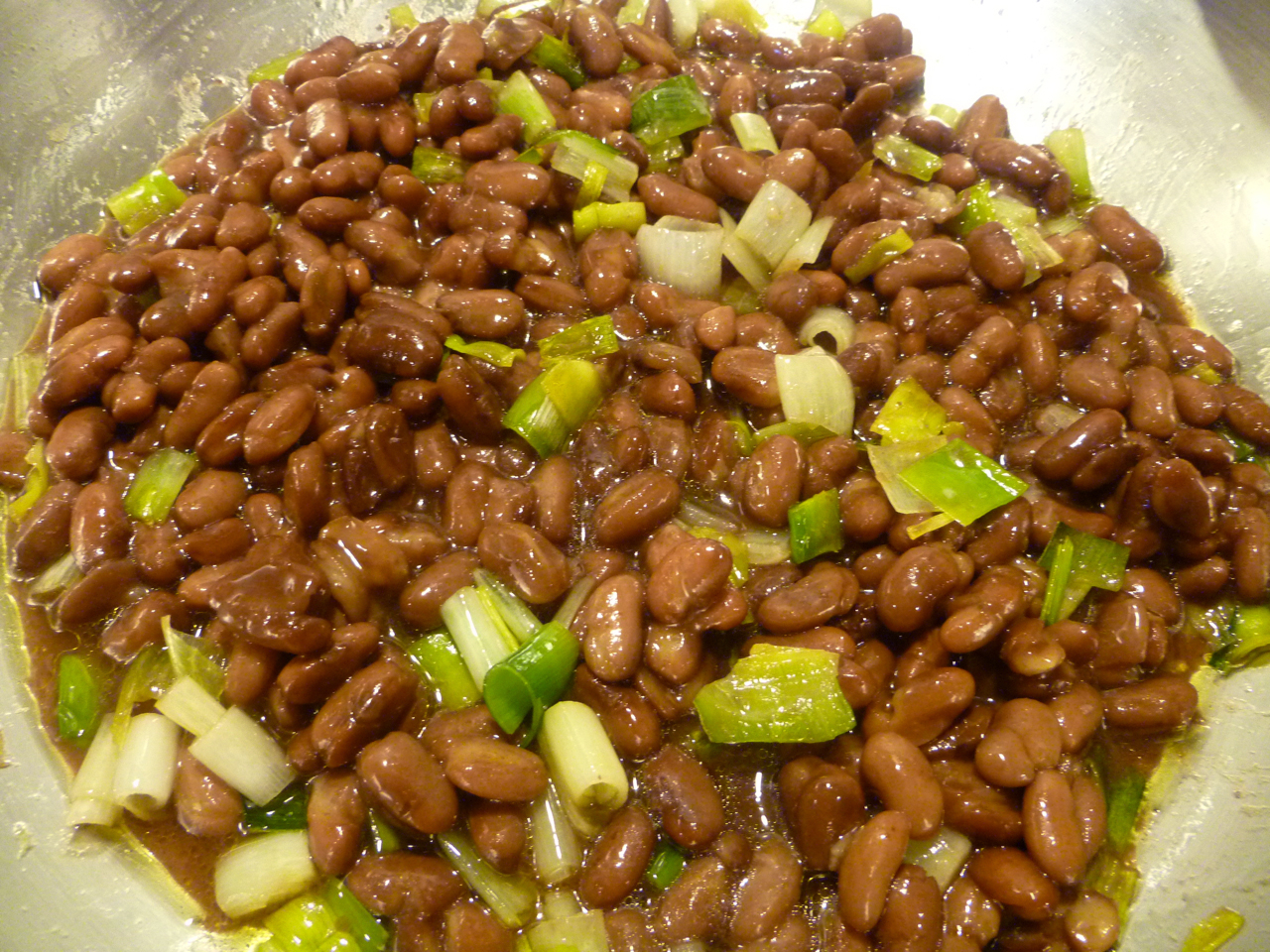

Rather than garlic, I used leeks slowly sauteed in olive oil, into which I stirred my soft cooked beans. Then, because this dish seemed to be journeying from the eastern Mediterranean toward the Iberian Peninsula, I finish off the pureed paste with a splash of sherry vinegar and a dusting of smoked paprika. The final dish tasted almost like pâté, rich and flavorful, with a hint of sherry. It made a nice dip for raw vegetables and a great lunch spread on fresh bread accompanied by fruity salads. 


Arikara Almond Bean Spread


1 cup Arikara beans (or substitute white kidney beans)
several sprigs of thyme
3 1/2 cups water
1 large or 2 medium leeks
4 Tbsp olive oil
1/2 cup whole almonds
2 tsp sherry vinegar
salt
smoked paprika for garnish


1. Rinse the Arikara beans and cook them on very low heat with about 3 1/2 cups of water, the thyme sprigs and a pinch of water until very soft, about four hours. Add more water during the cooking process if necessary and when the beans are done, add more salt to taste. 


2. Remove the root and green stem from the leek, slice lengthwise, and wash thoroughly. Cut into 1/2 inch slices. Heat a large skillet over medium low heat, add the olive oil, and saute the leeks for about 10 minutes, until they are very soft, but avoid browning them. Add the cooked beans and their cooking liquid and simmer with the leeks to meld the flavors and reduce the broth. The final mixture should have about about a half cup of syrupy liquid remaining. 


3. Meanwhile, toast the almonds in a dry skillet until fragrant. Transfer them to a food processor and pulverize into a fine meal. Add the leeks and beans and process for several minutes until smooth. Add the sherry vinegar and pulse. Taste and add more salt if necessary. 


4. Transfer to a bowl and dust with smoked paprika. Serve with fresh vegetables or crusty bread. 


Other recipes for locally grown beans
Barley and Cranberry Bean Soup with Kale
Bruna Bönor
Cranberry Beans and Collard Greens
Paprkia Chickpea, Delicata and Kale Salad
Pumpkin and Rio Zape Bean Soup
Vegetarian Bean Chili
Black Beans and Huevos Rancheros
Falafel and Grilled Zucchini
Lentil Caviar Salad with Poached Eggs
Coffee Braised Lamb Shanks and Arikara beans
Green Flageolet Bean and Tuna Salad
Creamy Green Flageolet Beans
Dutch Bullet Bean Soup with Indian spices
Arikara Beans with Tomatillo Pork
Ireland Creek Annie Baked Beans
Flageolet Bean Salad with Fennel, Orange, and Tapenade
Arikara Beans with Roasted Fennel and Peppers
Jacob's Cattle Bean and Ham Stew
Calypso Beans with Ginger and Black Mustard Seeds
Ireland Creek Annie bean bruschetta
Lemon and Herb Dutch Bullet Beans
Minty Green Flageolet Beans
Dutch Bullet Beans and Roasted Squash Soup
Rio Zape Beans with Toasted Chile Sauce
Arikara Bean Gratin
Calypso Bean and Leek Soup

Tuesday, May 3, 2011

Coffee Braised Lamb Shanks and Arikara Beans


With spring finally here, I had been toying with the idea of creating a recipe for one of my Lonesome Whistle Farm CSA heirloom bean varieties paired with spring lamb. White beans and lamb shanks is a classic combination and I thought that the Arikara variety, which is similar to white beans but with a slightly heftier, earthier flavor and hue, would complement lamb well. A contest theme from the food52 website sparked the inspiration for the flavors for this dish: coffee. Once I started thinking about cooking lamb with coffee, a whole palette of flavors came to mind: cumin, cinnamon, star anise, and to offset the bitterness of the coffee, dates and sun dried tomatoes.


I prepared a spice rub for the lamb shanks with ground coffee, toasted cumin seeds, red pepper flakes, garlic, fresh rosemary, and coarse sea salt to help grind together the ingredients.


I coated the lamb shanks with the rub and let them sit for a bit, while I prepared the other ingredients.


For aromatics with the beans, I used celery and onions,


and to flavor the braising liquid I used ground cumin, ground coriander, smoked paprika, star anise and a cinnamon stick,


and a generous portion of diced dried dates and sun dried tomatoes.


After browning the lamb shanks, I sauteed the aromatics and the spices, and assembled the broth, beans, and lamb in a large Dutch oven. Then I left the pot to cook in a low oven for several hours, filling the house with fragrant scents, until the beans were tender and the lamb was falling off the bone. The final dish was quite rich and benefitted from degreasing, which I was able to do easily after it had cooled in the refrigerator overnight, since I cooked it the evening before I served it.


I accompanied it with a salad with chopped radishes and pears,


and garnished the lamb with fresh chopped parsley and orange zest. The final result was one of the most delicious dishes I've cooked this year. The flavor of the beans was intense and complex, and paired perfectly with the lamb, with no single ingredient dominating the dish. I was pleased that the editors at food52 agreed and awarded this recipe an editors' pick.


Coffee Infused Braised Lamb Shanks and Arikara Beans


  1. Prepare the coffee spice rub for the lamb. Heat a small skillet, toast the cumin seeds for a minute or so until fragrant, and transfer to a mortar. Put the garlic cloves in the skillet and toast for several minutes, turning, until they develop some brown spots and start to soften. Remove the rosemary leaves from the stems, chop, and add to the mortar. Add the ground coffee, red pepper flakes, coarse sea salt, and peeled garlic cloves and smash well until the cumin seeds are crushed and you’ve created a smooth paste. You could also use a spice grinder or small food processor to prepare the rub. Coat the lamb shanks with the paste and let sit for a few minutes to infuse the flavors, while you prep the other ingredients.
  2. Soak the sun dried tomatoes in 2 cups boiling water for 15 minutes. Dice the onions and celery. Dice the dates and the sundried tomatoes, reserving the tomato-flavored water. Preheat the oven to 325.
  3. Heat a large Dutch oven or other ovenproof pan and add enough olive oil to coat the bottom. Over medium low heat, brown the lamb shanks on all sides, taking your time so that they have a chance to brown. Remove to a plate.
  4. Add another splash of olive oil if necessary, and put the onions and celery into the pot. Cook, stirring, until they are glassy. Add the ground cumin, coriander, and smoked paprika and cook for a minute until fragrant. Add the diced dates and sundried tomatoes and cook another minute. Add the red wine and cook another minute. Add the rinsed beans, the reserved tomato-flavored water and three additional cups of boiling water. Nestle the lamb shanks into the beans, pouring in any juices that accumulated and add the star anise and cinnamon stick. Salt and add more boiling water if necessary to ensure that the beans are covered by 1 inch of liquid.
  5. Heat the beans and lamb shanks on the stovetop until the liquid is simmering and then cover the pot and transfer to the preheated oven. Cook for about three hours, turning the lamb shanks occasionally and adding a little water if necessary, until the beans are tender and the lamb meat is falling off the bones. Toward the end of the cooking period, you could remove the pot lid to allow more of the liquid to cook off. The dish will be quite rich from the lamb fat and benefits from degreasing. You may want to cook this a day ahead, refrigerate it overnight, and then remove the hardened fat from the surface, and the reheat. Alternatively, remove pools of liquid fat from the surface with a spoon.
  6. Serve a generous portion of beans topped with a whole or half lamb shank. To prepare the garnish, chop together orange zest and parsley leaves and sprinkle over the lamb before serving.
Other recipes for heirloom beans

Saturday, February 5, 2011

Arikara Beans with Roasted Fennel and Peppers


These Arikara beans from Lonesome Whistle Farm were cultivated by the Dakota Arikara Native Americans and provided sustenance for Lewis and Clark during their Voyage of Discovery. Thomas Jefferson grew them at Monticello, and described them as "one of the most excellent we have had." I had a hankering for roasted fennel, and I thought these creamy beans would make a most excellent accompaniment. 


Rather than discard the fennel fronds, I decided to add them to the bean pot and allow them to infuse the beans as they simmered. I've been cooking dried beans in a slow cooker without any presoaking with excellent results. These ones were tender but still firm after three hours.


I had a red pepper, which I decided to roast along with the fennel bulb for additional caramelized flavor. I tossed these in a generous amount of olive oil, salt, and pepper, and roasted them in a hot oven, making sure to stir occasionally once they started to brown. Meanwhile, I drained about 4 cups of the fennel-infused Arikara beans, reserving the remaining beans and broth for another use.


I removed the pan from the oven when the fennel and peppers were beginning to char and immediately tossed in the beans so that they became coated in the hot oil and caramelized juices of the vegetables.


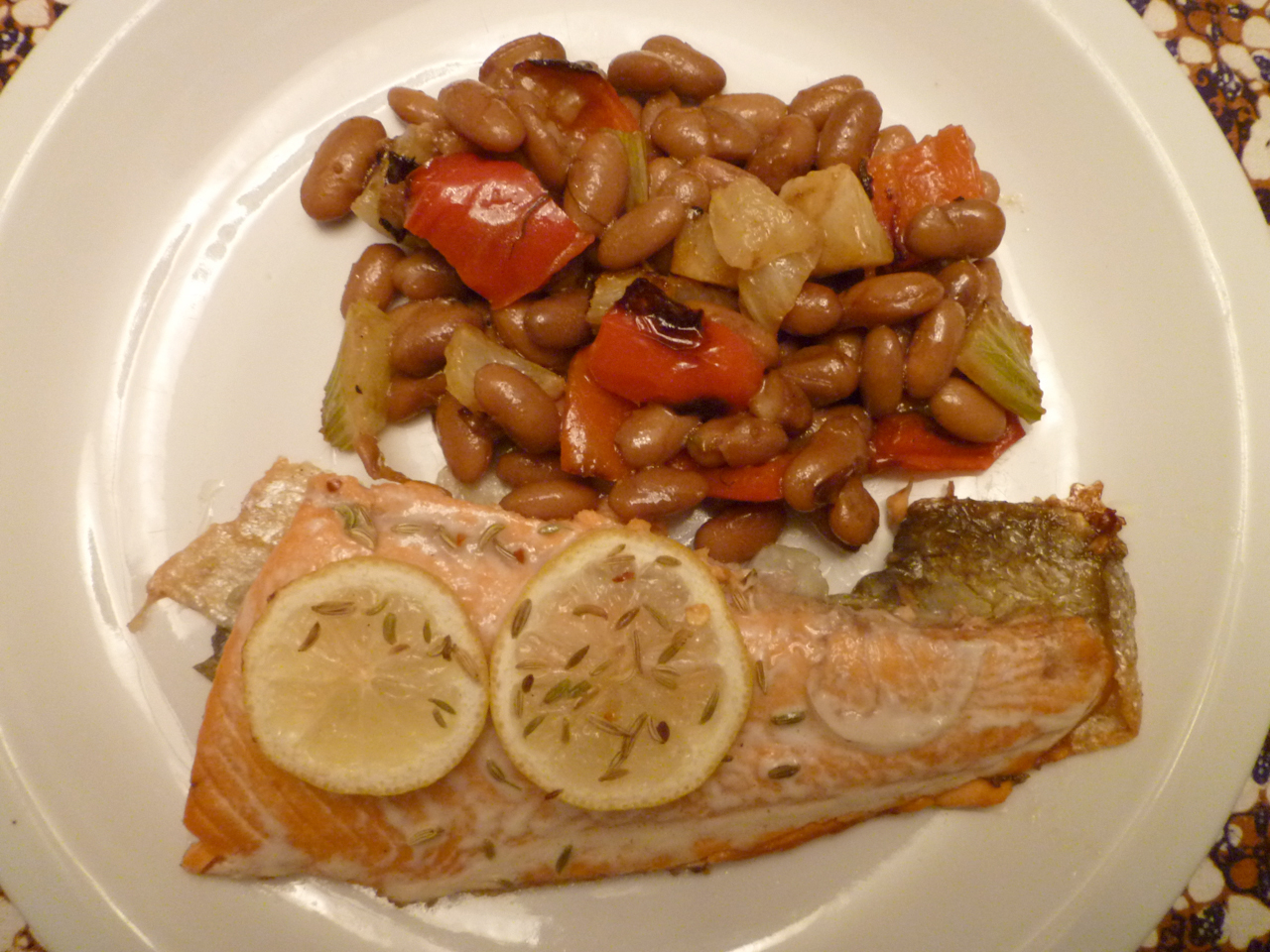
These beans, with their subtle fennel flavor contrasting with the bold, caramelized vegetable chunks, were a delicious accompaniment to some Salmon People salmon, stashed away from last summer's market, seared  in a hot skillet and finished in the oven.


Arikara Beans with Roasted Fennel and Peppers


2 cups (1 lb) Arikara beans rinsed, or substitute small white kidney beans
4 cups water
1 fennel bulb
1 red pepper
2 Tbsp olive oil
salt and pepper to taste


1. Rinse the fennel bulb and cut off the fronds. Combine the beans and water, layer on the fennel fronds in a slow cooker, and cook on low for about 3 hour until the beans are soft but still firm. The beans can also be cooked on the stovetop, but would require less time and may need more water. When they are cooked, remove the fennel fronds and salt generously. Strain about 4 cups of cooked beans, reserving the remain 2 cups and the bean liquid for another use.


2. Preheat the oven to 450 degrees. Cut the fennel bulb and red pepper into smaller chunks. Toss in a large ovenproof pan with the olive oil and salt and pepper. Roast for about 25 minutes, stirring every 5 to 10 minutes. When the vegetables are soft, caramelized, and starting to char, remove the pan from the oven and immediate stir in the 4 cups of drained beans, scraping the bottom of the pan to mix in all of the caramelized vegetable bits.


Other recipes for heirloom beans:
Jacob's Cattle bean and ham stew
Calypso beans with ginger and black mustard seeds
Ireland Creek Annie bean bruschetta
Lemon and herb Dutch bullet beans
Minty green flageolet beans
Dutch bullet beans and roasted squash soup
Rio Zape beans with toasted chile sauce
Arikara bean gratin
Calypso bean and leek soup